


Advantage of traditional pacemaker implantation
Reviewed by: Dr. Debopom Goswami
Posted on
7 Min Read

Not sure what you’re looking for?
Get in touch with our representatives for help!
Contact UsOur hearts are extraordinary organs that beat tirelessly to sustain life. However, sometimes their natural rhythm can falter, leading to conditions that can significantly impact the quality of life and even pose serious risks. This is where a pacemaker becomes a lifesaving device. Despite scientific and technical advancements with leadless pacemakers, the profound positive impact of traditional pacemaker implantation has been consistent. This procedure has stood the test of time, with a remarkable success rate of over 95% in restoring healthy heart rhythms and improving patient outcomes. This blog highlights the salient features of this procedure.
What is a Pacemaker?
A pacemaker is a small, battery-powered device designed to regulate your heartbeat. It is implanted under the skin, usually near the collarbone, and connected to your heart by thin wires called ‘leads’. When your heart beats too slowly (bradycardia) or irregularly (arrhythmia), the pacemaker sends gentle electrical pulses that prompt it to beat at a normal rate. This ensures sufficient oxygenated blood, alleviating symptoms like dizziness, fainting, fatigue, and shortness of breath.
Traditional pacemaker implantation
The traditional pacemaker implant procedure involves surgical placement of the device and its leads. This can be done in two different approaches- temporary pacemaker implantation and permanent pacemaker implantation. While temporary pacemaker implantation might be used in emergencies or short-term situations, traditional methods focus on permanent pacemaker implantation, offering a long-term solution for chronic heart rhythm disorders. It's generally minimally invasive, taking 1-2 hours.
-
Preparation- Patients receive local anaesthesia and often mild sedation for comfort.
-
Incision- A small incision is made, usually below the collarbone.
-
Lead placement- Leads are passed through a vein and guided to heart chambers using X-ray imaging.
-
Generator connection- Leads are connected to the pacemaker generator, then tucked into a small pocket under the skin.
-
Testing and closure- The device is tested for proper functioning, and the incision is carefully closed.
Recovery after pacemaker implantation
Recovery from pacemaker implant procedure is generally smooth, with most patients returning home within 1-2 days. Specific instructions on wound care and activity restrictions apply for a few weeks. Regular follow-ups help to monitor device function and ensure optimal heart rhythm management. Many patients report renewed energy, leading to a much-improved and active life.
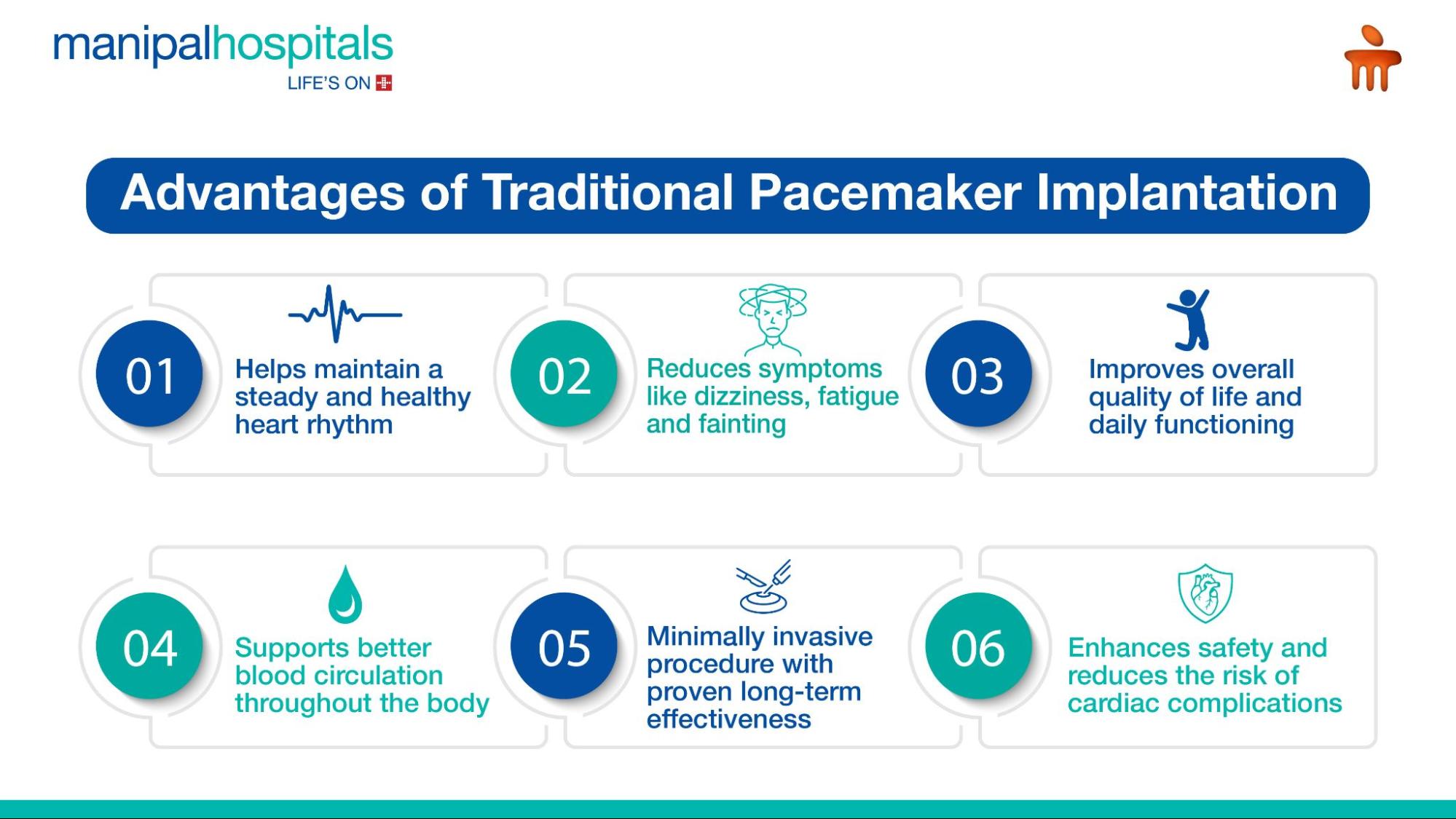
Advantages of traditional pacemaker implantation
Traditional pacemaker implantation remains prominent due to its significant benefits:
-
Proven reliability and longevity- With decades of refinement, traditional pacemakers are incredibly reliable. Modern devices have battery lives extending up to 10-15 years, minimising frequent replacements.
-
Exceptional success rates- As mentioned, traditional pacemaker implantation with success rates exceeding 95%, can effectively manage bradycardia and heart blockage as well as reduce associated symptoms significantly.
-
Significant improvement in quality of life- Patients report dramatic improvement in daily lives with a significant reduction in symptoms like fatigue and dizziness, allowing resumption of active lifestyles.
-
Safety profile- While all medical procedures carry some risk, complication rates for traditional pacemaker implantation are remarkably low (often less than 1-2%) due to advanced surgical techniques and meticulous patient care.
-
Versatility- Traditional pacemakers can be programmed to address a wide range of heart rhythm issues, offering tailored therapy for individual patient needs.
-
Established expertise- Medical professionals worldwide have extensive experience with this procedure, ensuring expert care and optimal outcomes.
Care essentials
For optimal healing and device function after pacemaker implantation, the following guidelines remain imperative :
|
DO'S |
DON’TS |
|
Follow your doctor's instructions regarding activity levels and arm movements. |
Lift heavy objects or engage in strenuous activities with the arm on the side of the implant for the first 4-6 weeks. |
|
Attend all scheduled follow-up appointments for device checks. |
Wear tight clothing or jewellery that could irritate the incision site. |
|
Carry your pacemaker identification card at all times. |
Directly place mobile phones over the pacemaker site; use the opposite ear. |
|
Inform airport security personnel about your pacemaker. |
Undergo MRI scans unless your pacemaker is specifically MRI-compatible, and your doctor approves. |
|
Report any symptoms like dizziness, fainting, or prolonged redness at the incision site to your doctor immediately. |
Ignore any unusual symptoms or feelings. |
Addressing potential risks and complications
While traditional pacemaker implantation is extremely safe, like any medical procedure, it carries minimal risks such as infection, bleeding, collapsed lung (pneumothorax), or lead displacement. The incidence of these complications is very low (often less than 1%), and an experienced team of experts along with advanced techniques and meticulous care can minimise these issues, ensuring your safety and well-being.
Conclusion
A traditional pacemaker implant plays a vital role in regulating irregular or slow heart rhythms, ensuring the heart beats steadily and efficiently. It helps improve quality of life by reducing symptoms while supporting overall heart health. At Manipal Hospitals, our expert cardiac team utilises state-of-the-art technology and stringent safety protocols, ensuring the best outcomes for your pacemaker implant procedure. We offer a patient-centric approach, guiding you from diagnosis to post-procedure care.
If you or a loved one experiences irregular heartbeat symptoms, book an appointment with our expert cardiologists at Manipal Hospitals Broadway today to take the first step towards a healthier future.
Frequently Asked Questions
Most modern pacemaker batteries typically last between 7 and 15 years, depending on the patient’s heart condition, device settings, and overall usage patterns. Regular follow-up check-ups and device monitoring are essential to track battery performance.
Generally, yes. It's recommended to keep mobile phones at least six inches away from your pacemaker and use the ear opposite the implant site. Avoid placing the phone in a shirt pocket directly over the device.
Initial restrictions involve avoiding heavy lifting or strenuous arm movements for a few weeks to allow proper healing. Most patients can resume normal activities, including light exercise, after their doctor gives clearance.
Typically, follow-up appointments for an individual with a permanent pacemaker are scheduled a few weeks after implantation, then usually every 6-12 months. These check-ups monitor device function, battery life, and your heart rhythm.
A temporary pacemaker is implanted for short-term heart rhythm management, often in emergencies or during recovery from certain heart conditions, with wires placed externally. A permanent pacemaker implantation is a long-term solution for chronic heart rhythm disorders, with the device fully implanted under the skin.
Share this Article


Recent Blogs

Blood Cancers 101: Understanding Leukaemia, Lymphoma and Myeloma
24 Jun 20267 Min Read
Dealing with complex medical conditions like blood cancer can feel challenging and confusing. This guide demystifies blood cancers by focusing on the three primary types of blood cancer- Leukaemia, Lymphoma, and Myeloma. It provides clarity and insights into these conditions, their symptoms, diagnosis, and treatment approaches to help patients and their families understand the disease better and make informed decisions about care and management.
Read Nowকিডনির স্বাস্থ্য ও আপনার খাদ্যাভ্যাস: যেসব খাবার উপকারী এবং যেসব খাবার ক্ষতিকর
24 Jun 20266 Min Read
কিডনি হল শরীরের অন্যতম গুরুত্বপূর্ণ অঙ্গ যা শরীর থেকে বর্জ ও বিষাক্ত পদার্থ ছেঁকে বার করে রক্তচাপ নিয়ন্ত্রণ, হরমোন উৎপাদন, ও শরীরকে সুস্থ থাকতে সাহায্য করে। তাই, কিডনির স্বাস্থ্য বজায় রাখা অত্যন্ত জরুরি। আমরা যা খাই, তা সরাসরি আমাদের কিডনির কার্যকারিতার ওপর প্রভাব ফেলে। ভুল খাদ্যাভ্যাস কিডনির ওপর চাপ সৃষ্টি করতে পারে, যা পরবর্তীকালে কিডনি রোগের কারণ হতে পারে। তবে সঠিক কিডনি ডায়েট প্ল্যান অনুসরণ করে আপনি আপনার কিডনিকে সুরক্ষিত রাখতে পারেন, এমনকি কিডনি রোগের অগ্রগতি রোধ করতে পারেন। এই নিবন্ধে কিডনির স্বাস্থ্য বজায় রাখতে কি কি খাবার গ্রহণ ও বর্জন করা উচিত, সেই বিষয়ে বিস্তারে আলোচনা করা হয়েছে।
Read NowAtrial Fibrillation (AFib): Symptoms, Stroke Risk and Modern Treatment Options
24 Jun 20265 Min Read
One of the most common heart rhythm disorders hospitals encounter is Atrial Fibrillation, often called AFib. This condition is characterised by an irregular and often rapid heartbeat, and affects an estimated 33.5 million people around the world. Left untreated, it can significantly increase the risk of serious complications like stroke. Awareness towards atrial fibrillation symptoms, causes, and modern treatment options is crucial for early detection and effective management. This blog guides you through.
Read NowDementia Symptoms: Causes of Memory Loss and Signs to Watch For
24 Jun 20267 Min Read
Memory loss can be a worrying experience. While occasional forgetfulness is a normal part of aging, persistent and progressive changes could possibly be dementia symptoms. This blog aims to empower the readers to recognise early dementia symptoms and understand underlying causes, ensuring timely intervention.
Read NowAdvantage of traditional pacemaker implantation
08 Jun 20267 Min Read
Our hearts are extraordinary organs that beat tirelessly to sustain life. However, sometimes their natural rhythm can falter, leading to conditions that can significantly impact the quality of life and even pose serious risks. This is where a pacemaker becomes a lifesaving device. Despite scientific and technical advancements with leadless pacemakers, the profound positive impact of traditional pacemaker implantation has been consistent. This procedure has stood the test of time, with a remarkable success rate of over 95% in restoring healthy heart rhythms and improving patient outcomes. This blog highlights the salient features of this procedure.
Read NowEpilepsy in Adults v/s Children: How Symptoms Differ and Why Early Diagnosis Changes Everything
29 May 20265 Min Read
Epilepsy is a chronic neurological disorder which happens due to abnormal electrical activity in the brain. Epilepsy symptoms may vary between individuals, with seizures being the most common. Causes of seizures may also vary between adults and children for a number of reasons. This blog upholds a comparative study of how epilepsy differs between children and adults, and why early diagnosis plays a pivotal role.
Read Nowরোবোটিক হাঁটু প্রতিস্থাপন অস্ত্রোপচারের পর আরোগ্যলাভ: সময়রেখা ও পরামর্শ
20 May 20265 Min Read
হাঁটুর সমস্যায় জর্জরিত হয়ে হাঁটাচলার শক্তি হারিয়ে ফেলা ব্যক্তিদের ক্ষেত্রে হাঁটু প্রতিস্থাপন মানে নতুন করে জীবনের স্বাভাবিক ছন্দ ফিরে পাওয়া। কিন্তু এই সুস্থতার পথে প্রথম পদক্ষেপটি হলো সঠিক আরোগ্যলাভ। রোবোটিক হাঁটু প্রতিস্থাপন সার্জারি আধুনিক চিকিৎসা বিজ্ঞানের একটি যুগান্তকারী পদ্ধতি, যা হাঁটু ব্যথায় আক্রান্ত রোগীদের জন্য আশার আলো নিয়ে আসে। গবেষণায় দেখা গেছে যে, সঠিক পুনর্বাসনের মাধ্যমে ৯০% এরও বেশি রোগী অস্ত্রোপচারের পর দ্রুত স্বাভাবিক কার্যকালাপে ফিরে আসতে পারেন। এই ব্লগ রোবোটিক হাঁটু প্রতিস্থাপনের পর আপনার আরোগ্যলাভের সময়রেখা এবং কিছু গুরুত্বপূর্ণ পরামর্শ নিয়ে আলোচনা করবে।
Read NowCapsule Endoscopy: What It Is, Procedure, and Benefits
29 Apr 20267 Min Read
For complex gastrointestinal issues, especially those affecting the small intestine, traditional methods can fall short. This is where capsule endoscopy offers a revolutionary, non-invasive solution. If you experience persistent digestive symptoms like unexplained bleeding, chronic abdominal pain, or malabsorption, your doctor might recommend a capsule endoscopy procedure. This blog is a comprehensive guide that tells you all about capsule endoscopy how and why it is done, its benefits and more.
Read NowJoint Replacement Surgery: When Do You Need It?
08 Apr 20267 Min Read
Joint pain can be debilitating and significantly affect your quality of life, mobility, and overall well-being. For many, managing chronic joint pain becomes a daily struggle. Joint replacement surgery has emerged as a highly effective solution for such individuals suffering from debilitating joint pain, helping restore mobility, relieve chronic discomfort, and significantly improve overall quality of life when conservative treatments no longer provide adequate relief. Deciding when to undergo joint replacement can be challenging for many individuals living with chronic joint pain. This blog guides you through the signs that may indicate the need for joint replacement surgery, the conditions that commonly require it, and what to expect from the procedure.
Read Nowউচ্চ রক্তচাপ নিয়ন্ত্রণের জন্য ৮টি ঘরোয়া প্রতিকার
03 Apr 20267 Min Read
বর্তমান দ্রুতগতির জীবনে উচ্চ রক্তচাপ বা হাইপারটেনশন একটি সাধারণ স্বাস্থ্য সমস্যা হয়ে দাঁড়িয়েছে। এটি 'নীরব ঘাতক' নামেও পরিচিত, কারণ প্রায়শই গুরুতর পর্যায়ে পৌঁছানোর অবধি এর কোনও স্পষ্ট উপসর্গ থাকে না। বিশ্বে, প্রতি ৪ জন প্রাপ্তবয়স্কের মধ্যে ১ জন উচ্চ রক্তচাপে ভুগছেন, যা হৃদরোগ, স্ট্রোক এবং কিডনি রোগের প্রধান কারণ। তবে আশার কথা হলো, জীবনযাত্রার কিছু সহজ পরিবর্তনের মাধ্যমে এবং উচ্চ রক্তচাপের ঘরোয়া প্রতিকার মেনে পরিস্থিতি নিয়ন্ত্রণ করা সম্ভব। এই ব্লগ-এর মাধ্যমে প্রাকৃতিক উপায়ে রক্তচাপ কমানোর জন্য কিছু সহজ এবং কার্যকর টিপস দেওয়া হলো, যা আপনার সামগ্রিক স্বাস্থ্যের উন্নতিতে সহায়ক হবে।
Read Now