


The Lifestyle Factors Contributing to Breast Cancer
Reviewed by: Manipal Hospitals
Posted on
8 Min Read

Not sure what you’re looking for?
Get in touch with our representatives for help!
Contact UsFor many women, a breast cancer diagnosis comes as a sudden diagnosis, especially when there is no obvious family history or genetic warning, and when that happens, the immediate questions that echo in their minds are, "How did this happen?" Could it have been prevented?
For years, breast cancer has largely been understood in terms of factors we cannot control, such as age, genetics, and hormonal changes. Among these, inherited mutations like BRCA1 and BRCA2 have been especially important to identify, particularly in families with a history of breast or ovarian cancer. These genetic changes significantly increase lifetime risk, and screening for them has enabled earlier monitoring and better outcomes for many women.
However, this information is only part of the picture. Recent studies show that the small choices we make each day may have a bigger impact than we once believed. This does not mean lifestyle is the only cause, but it does shift the conversation from thinking breast cancer is unavoidable to recognising that some risks can be managed.
In this blog, we examine the shifting understanding of breast cancer risk, combining established knowledge with emerging insights, as explained by a leading oncologist in Yelahanka, Bangalore.
A New Way of Thinking About Risk
In the past, breast cancer risk was linked to things that couldn't be changed. These are:
-
Getting older: The risk increases as women age.
-
Genetics: Mutations like BRCA1 and BRCA2 greatly increase the risk.
-
Family history: Having close relatives with breast cancer raises the risk.
These are still important, but they don't fully explain why so many women who don't have these risk factors still get the disease.
Recent global research, including findings published in The Lancet Oncology, has pointed out an important fact: a substantial percentage of breast cancer cases may be associated with modifiable lifestyle and metabolic factors.
This gives us a new perspective: risk does not always appear suddenly. It can build up gradually over time.
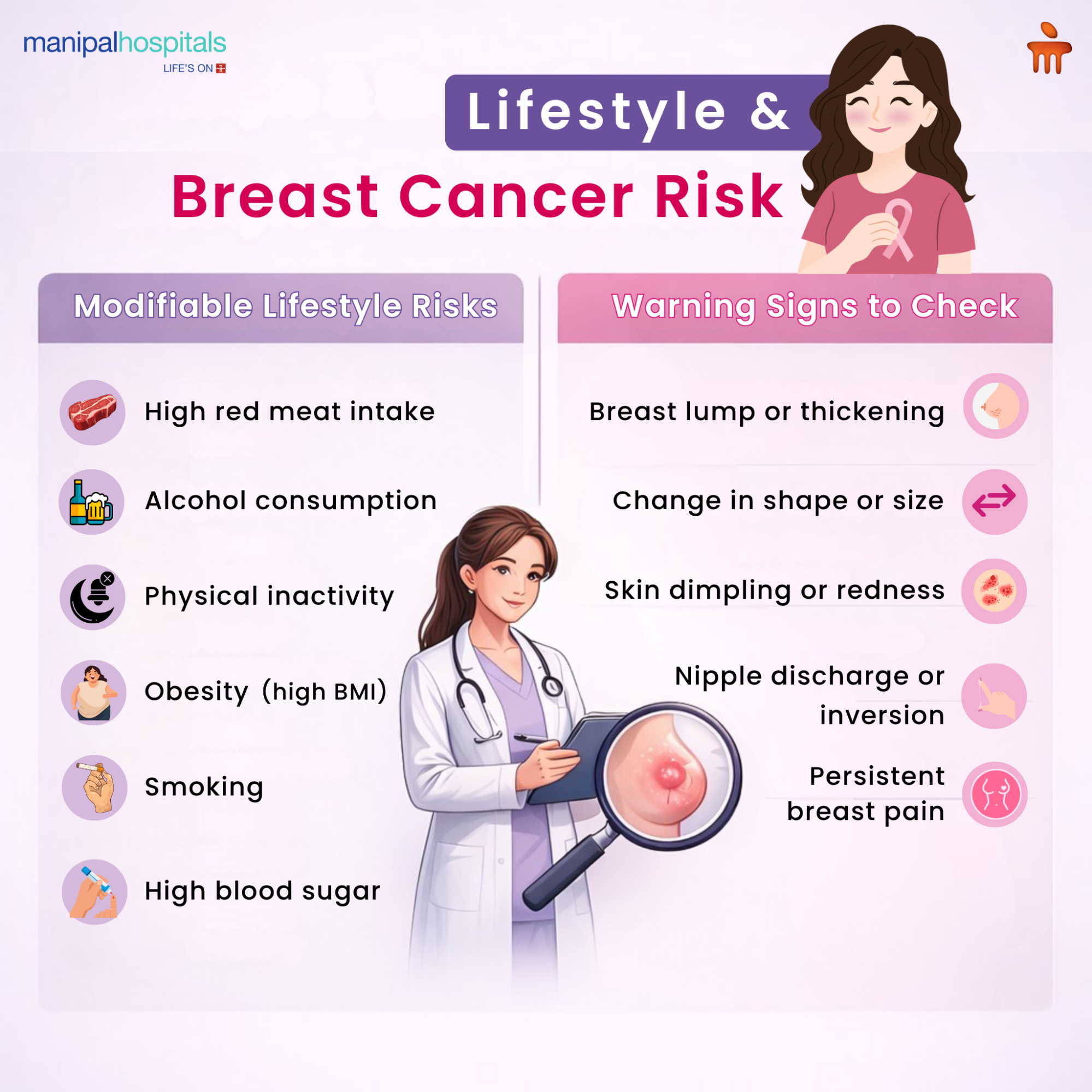
The Numbers We Can’t Ignore
Recent findings highlight how daily habits can affect breast cancer risk. No single factor is responsible, but their combined effect matters.
Lifestyle Factors Linked to Breast Cancer Risk:
|
Risk Factor |
Estimated Contribution |
What It Means |
|
High red meat intake |
~11% |
Diet patterns may influence hormonal and metabolic pathways |
|
Tobacco use |
~8% |
Smoking affects cellular health and increases cancer risk |
|
High blood sugar |
~8% |
Poor glucose control impacts metabolic balance |
|
High BMI (overweight/obesity) |
6–7% |
Excess fat tissue can alter hormone levels |
|
Alcohol consumption |
~2% |
Even moderate intake may slightly increase risk |
|
Physical inactivity |
~2% |
Lack of movement affects metabolism and hormone regulation |
These numbers might seem small individually, but together they account for a significant part of the overall breast cancer risk. It's not just the percentage that matters; it's the pattern. These risks are often linked and grow over time.
The Silent Shift in Risk Patterns
In recent years, there has been a clear change in how breast cancer risk presents, especially in cities.
Some areas have seen a decrease in the risks associated with smoking, but other factors have quietly emerged as contributors:
-
Rising obesity rates: Particularly in younger women
-
Increasing diabetes and insulin resistance: Even in the 30s and 40s
-
Sedentary lifestyles: Long hours of sitting, minimal physical activity
-
Dietary changes: Increased consumption of processed and high-calorie foods
This shift is especially noticeable in places like India, where new work patterns, changing lifestyles, and rapid urbanisation are affecting people's overall health.
This trend does not mean traditional risks are less important. It means there are more layers of risk that we are only beginning to understand.
When Lifestyle Turns into a Risk Factor
Metabolic changes develop slowly, unlike genetic mutations or sudden illnesses. They often do not show clear signs at first. Common contributing patterns include:
-
Long working hours with minimal movement
-
Irregular meal timings or frequent processed food intake
-
Chronic stress with little recovery time
-
Poor sleep patterns
-
Gradual weight gain over the years
These habits may seem manageable on their own, but together they can affect the body's function.
How Lifestyle Affects the Body
-
Hormonal imbalance: Excess body fat can increase estrogen levels
-
Insulin resistance: Affects how the body uses sugar and energy
-
Chronic inflammation: Increases the risk of diseases developing in the body
-
Cellular stress: Prolonged metabolic stress alters typical cellular function
Over time, these changes can increase the risk of diseases like breast cancer.
A New Risk Profile: Younger Women
More women aged 30 to 50 are getting breast cancer, which is concerning.
A lot of women have no significant family history, do not carry known genetic mutations, and appear otherwise healthy. This is where lifestyle and metabolic factors may play a bigger role. For this group, the risk is often hidden. It does not follow the usual patterns, which makes early detection more difficult. This does not mean lifestyle alone causes breast cancer. However, it shows that the range of risks is broader than we once thought.
Prevention: A Shift from Reaction to Awareness
It is important to note: Living a healthy life does not eliminate the risk of getting breast cancer.
But it can lower the risk, which is where preventive oncology becomes important. There is now more emphasis on long-term health patterns instead of just detection.
Simple Lifestyle Measures That Matter
-
Maintain a healthy weight: Helps regulate hormone levels
-
Stay physically active: Even moderate exercise improves metabolic health
-
Balanced diet: Focus on whole foods, fibre, and reduced processed intake
-
Limit alcohol consumption: Even small reductions can help
-
Control blood sugar levels: Important for overall metabolic balance
-
Manage stress: Chronic stress affects hormonal health
-
Prioritise sleep: Supports immune and metabolic function
These changes are relatively simple. They are small, regular habits that support your health over time.
Why This Perspective Matters
For a long time, people believed breast cancer happened without warning. While this is still true in many cases, our changing understanding gives us something valuable: a sense of control. There is no blame or guilt involved. This is not about saying your lifestyle causes cancer.
Instead, it is about realising that the risk may increase over time and add up with small habits. Being aware lets you act sooner. This shift in thinking can be empowering. It changes the conversation from feeling helpless to making informed choices.
When Should You Be More Vigilant?
Being aware of your lifestyle matters, but regular check-ups and medical advice remain essential.
If you see any of the following, you should think about seeing a doctor:
-
A lump or thickening in the breast
-
Changes in breast shape or size
-
Skin changes such as dimpling or redness
-
Nipple discharge or inversion
-
Persistent breast pain
Women with a higher risk (due to a family history or genetic predisposition) may be advised to undergo screening earlier and more often.
Conclusion
Breast cancer is complicated. It can't always be predicted, and it can't always be stopped. But it is becoming more and more clear that some aspects of risk can be modified.
Risks we often overlook, such as daily habits, metabolic health, and long-term lifestyle patterns, can affect outcomes over time. Knowing these facts should not cause fear. It helps people become more aware. When you combine awareness with regular screenings and good choices, you can make a real difference.
You do not need to make significant changes or have perfect routines to care for your health. Small, regular choices can help your body over time. Sometimes, the risks we do not notice are the ones that deserve the most attention.
Frequently Asked Questions
No, making changes to your lifestyle cannot completely stop breast cancer. But they can lower the risk by improving metabolic health, hormone balance, and general health, which may lower the chances of getting the disease.
Genetics is a factor, but many women with breast cancer do not have a family history. More and more, people are realising that lifestyle and environmental factors add to overall risk.
Different groups have different recommendations for when women should start getting regular mammograms. Most women should start getting them around age 40, or sooner if they have a family history or genetic risk factor.
Yes, regular exercise helps keep a healthy weight, balance hormones, and lower inflammation, all of which can lower the risk of cancer over time.
Yes, there has been a clear increase in cases among younger women. Changing lifestyle and metabolic factors may be making this trend happen, even though it is still less common than in older women.
Share this Article


Recent Blogs

Understanding Burst Fractures: Spinal Impact, Symptoms, and Recovery Options
13 Jul 20269 Min Read
A severe back injury can immediately disrupt your life, causing intense pain and sudden uncertainty about your mobility. Among the various types of spinal injuries, a burst fracture is one that requires immediate, expert medical attention. Hearing that a bone in your back has broken can be frightening. However, learning about the structural nature of this injury, how doctors evaluate the damage, and the available treatment paths can help you navigate your recovery with clear expectations. In this blog, experienced specialists from a leading orthopaedic hospital in Yelahanka, Bangalore, explain the differences between stable and unstable spinal breaks, common symptoms to watch for, and what to expect during medical management.
Read NowPregnancy Nutrition Guide: Essential Foods to Avoid to Protect Your Health
13 Jul 20268 Min Read
Pregnancy brings about a substantial shift in how you approach your daily routines, particularly your diet. While you are likely focused on maximising your intake of vitamins, iron, and essential nutrients, identifying which items to remove from your plate is equally critical. Navigating dietary advice during these nine months can sometimes feel overwhelming due to conflicting information from family, friends, and internet forums. When looking into foods that can cause miscarriage, it is important to separate traditional folklore from verified medical facts. In scientific terms, foods themselves rarely trigger a pregnancy loss directly. By understanding what makes certain dietary choices hazardous, you can protect your pregnancy while maintaining a balanced, stress-free diet. In this blog, specialists from the best obstetrics and gynaecology hospital in Yelahanka debunk common pregnancy-related dietary myths, highlight foods that may pose potential risks during pregnancy, and provide expert guidance to help you make safe and informed nutritional choices for a healthy pregnancy.
Read NowHow Magnesium Affects Your Nervous System and Sleep Quality
13 Jul 20268 Min Read
Sleep does not always come when you want it to. You might lie in bed with a mind that will not quieten, or you drift off only to wake at three in the morning and stare at the ceiling. When restful nights feel out of reach, it is natural to look for solutions that do not involve heavy medication. Magnesium is one of those remedies that keeps coming up in conversation, and you may be wondering, does magnesium help you sleep, or is it just another health trend? Magnesium does not function like a prescription sleeping pill; it does not force your brain to shut down or artificially cause drowsiness. Instead, it interacts with several chemical pathways in your body to help your nervous system transition into a calm state, making it easier for natural sleep to occur. Understanding the actual science behind this mineral helps you make practical choices for your evening routine. In this blog, we present clinical insights from experts at the best neurology hospital in Yelahanka, Bangalore, exploring the connection between magnesium and sleep, the science behind its effects on the body, its potential benefits, and how to use it safely as part of a healthy sleep routine.
Read NowUnderstanding Middle Back Pain: Common Triggers and Clinical Relief Pathways
13 Jul 20266 Min Read
If you have ever spent a long afternoon hunched over a laptop, driving through heavy traffic, or lifting heavy boxes, you probably know exactly what that deep, stubborn ache between your shoulder blades feels like. While the lower back and neck seem to get all the attention in conversations about spinal health, middle back pain can completely derail your day. It makes sitting uncomfortable, twisting to look behind you painful, and even taking a deep breath feels strangely restricted. Because the middle section of the spine is physically connected to the rib cage, it is inherently more rigid and stable than either the neck or the lower back. When pain develops in this stable zone, it often stems from distinct mechanical issues, structural changes, or muscle strains. Understanding the specific factors that trigger this discomfort can reduce the frustration of dealing with an undiagnosed ache and help you select an effective management path. Through this blog, we provide you with clinical insights from spine care experts from one of the best spine care hospitals in Yelahanka, Bangalore, exploring its primary symptoms, underlying anatomical causes, and the clinical treatment options available in modern spine care.
Read NowUnderstanding Cardiomegaly: Causes, Reversibility, and Longevity
13 Jul 202610 Min Read
Discovering that you or a loved one has an enlarged heart, known clinically as cardiomegaly, can be a profoundly unsettling moment. For many, the diagnosis comes to light incidentally during a routine chest X-ray for an unrelated cough, or perhaps following an echocardiogram ordered to investigate sudden shortness of breath or persistent fatigue. It is completely natural for the mind to immediately jump to heavy questions about long-term survival, daily limitations, and the fundamental stability of your health. However, a diagnosis of cardiomegaly is not a single, unchangeable medical verdict. It is an essential clinical warning sign indicating that your cardiovascular system is working under abnormal stress. With modern diagnostic mapping, targeted medical therapies, and structured lifestyle adjustments, many patients successfully manage the underlying issues, halt the progression of structural changes, and maintain an excellent quality of life. This blog will provide clinical insights from experts at a top cardiology hospital in Yelahanka, exploring the factors influencing survival timelines, structural causes, and the realistic treatment paths available to patients today.
Read NowPain in the Hip and Upper Thigh: What It Could Mean and When to Get Help
10 Jun 20267 Min Read
Pain around the hip and upper thigh can feel like it is coming from one single spot. Many people describe this as thigh joint pain, even when the source is the hip joint or nearby tissues. The discomfort may be felt in the groin in some people. Others notice it on the outer side of the hip or along the upper thigh. At times, it can even extend toward the lower back. The exact location and how the pain behaves during movement give important clinical clues. The hip lies very close to the upper thigh, so pain at the hip and thigh joint often overlaps and feels difficult to separate. In most cases, the cause may involve the joint itself, surrounding muscles or tendons, or sometimes irritation of nearby nerves. In this we bring expert clinical insights from a top orthopaedic hospital in Yelahanka, Bangalore, to help you understand the causes for your upper thigh pain and discomfort.
Read NowWhy Your Shoulder Pain May Be a Rotator Cuff Tear
01 Jun 20268 Min Read
At first, the shoulder may only hurt during certain movements. Pain during everyday tasks is often one of the first signs people notice. Lifting bags, reaching for clothes, or turning onto one side in bed may start to feel uncomfortable. Many people ignore these changes for months, expecting the pain to improve on its own. In some cases, though, a rotator cuff tear may cause ongoing shoulder pain. The shoulder is one of the body’s most flexible joints. It supports everyday movements like lifting, rotating, pushing, pulling, and carrying. Because it is used so often, it can become strained or injured over time. After the age of 40, this tear becomes a common cause of ongoing shoulder pain in adults. This condition can affect athletes, office workers, gym goers, and even homemakers. In this blog, a top orthopaedic surgeon in Yelahanka, Bangalore, explains what a rotator cuff tear involves, why it happens, and the main symptoms to look out for. It also outlines the different treatment paths, what the recovery process looks like, and the specific signs that mean you should see a specialist. Conditions affecting the bones, joints, muscles, and tendons are commonly evaluated and managed through the Orthopaedics Department.
Read NowAnaemia in Chronic Kidney Disease: Causes, Symptoms, and Treatment Options
29 Apr 20266 Min Read
Anaemia in chronic kidney disease is a common yet often under-recognised complication that can significantly affect overall health and quality of life. Kidney disease and anaemia are often seen together. As kidney damage increases, the risk of anaemia also rises. Many people with later stages of kidney disease experience this problem. Understanding anaemia in chronic kidney disease at an early stage can help in getting the right care and managing the condition better. In this blog, an experienced nephrologist in Yelahanka, Bangalore helps you understand why anaemia is so common in chronic kidney disease, what symptoms to watch for, and how timely care can make a meaningful difference.
Read NowWhat Size of Prostate Is Dangerous? Understanding Symptoms and When to Seek Care
27 Apr 20266 Min Read
Prostate health often becomes a concern as men grow older, especially when urinary changes start showing up. Many people ask what size of prostate is dangerous, but the answer depends on age. The prostate is a small gland in younger men, and it slowly increases in size with age. An increase in size is common and happens in many men after 50. It does not always mean something serious. At the same time, a larger prostate can start pressing on the urinary passage and cause discomfort. That is where questions like "Is enlarged prostate dangerous?" begin to come in. In this blog we present clinical insights from a top urologist in Yelahanka, Bangalore, to help you understand how the prostate size impacts your overall health. We also discuss the symptoms and causes of an enlarged prostate and when to ignore it and when to get it checked.
Read NowUnderstanding the Link Between Late Pregnancy and Breast Health
24 Apr 20267 Min Read
In the modern landscape of 2026, the timeline of a woman’s life looks very different from it did just a few decades ago. Many women are choosing to prioritise higher education, establish complex careers, and achieve financial independence before starting a family. This shift has made delayed motherhood a very common choice across the globe. While this decision allows for emotional and professional maturity, it is also a choice that interacts with our biology in specific ways. Our bodies operate on a hormonal clock that hasn't quite caught up with our social progress, and this creates a unique set of considerations for long-term health. One of the most discussed topics in women’s wellness is the relationship between the timing of pregnancy and breast health. There are numerous aspects in connection with age and breast cancer; however, one of the primary aspects that needs to be considered is the age of women's first pregnancy. As this age grows, certain processes take place in the body, influencing the overall well-being of females, especially in terms of breast cancer risks. In this blog, we discuss the link between delayed pregnancy and the increased risk of breast cancer, as explained by a leading oncologist in Yelahanka, Bangalore.
Read Now