

Baner

4.3
Advanced respiratory support for critical and post-operative care. You're in safe hands!
A ventilator machine helps patients breathe during critical conditions. It is a life-supporting device that delivers a controlled mix of oxygen and air into the lungs, supporting patients with severe respiratory failure, post-surgical recovery, or critical illness. At Manipal Hospitals, critical care specialists and anaesthesiologists manage ventilator support and calibrate settings to each patient's needs. Ventilator machine usage spans adult, paediatric, and neonatal intensive care, as well as operating theatres during major surgery. Timely and well-monitored ventilator support improves survival outcomes and reduces complications in critically ill patients.
A ventilator pushes a set volume or pressure of air, mixed with oxygen, into the lungs through a tube (placed in the windpipe) or a tight-fitting mask. The machine is connected to sensors that continuously track the patient's breathing pattern, oxygen levels, and lung pressure.
The critical care team and anaesthesiologists adjust the ventilator machine's function, including breathing rate, oxygen concentration, and pressure support, based on the patient's condition. Some patients need full support because they cannot breathe at all, while others need partial support to assist weak breathing efforts. As the patient's condition improves, the settings are gradually reduced until they can breathe independently, a process called weaning.
4.3
The critical care or anaesthesiology team assesses the patient's breathing status, oxygen levels, and underlying condition to determine the level of ventilator support needed.
| Advanced Technology | Conventional Approach | |
|---|---|---|
| Precision | Automated real-time calibration based on lung compliance and breath-by-breath tracking | Fixed or manual parameter adjustments requiring periodic clinical review |
| Visualization | Continuous graphical waveform analysis for volume, pressure, and flow rates | Basic quantitative numerical output with limited real-time visual trends |
| Invasiveness | Adaptive pressure modes allowing non-invasive mask options when clinical conditions permit | Primary reliance on standard endotracheal intubation setups |
| Recovery | Automated weaning protocols to shorten overall time on life support | Structured, step-by-step manual weaning trials |
| Patient Experience | Synchronised airflow reducing patient effort and discomfort | Standardised airflow delivery requiring closer monitoring for natural breath alignment |


Discover stories of
We leave no stone unturned in exploring alternate treatment options for our patients. Our multidisciplinary teams deliver advanced, personalised care focused on restoring health and empowering patients to overcome serious medical challenges and regain their lives.
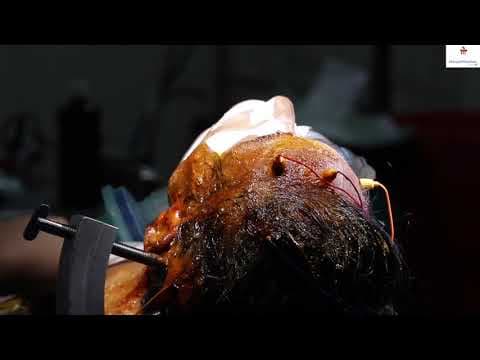
Robot Assisted Radical Prostatectomy
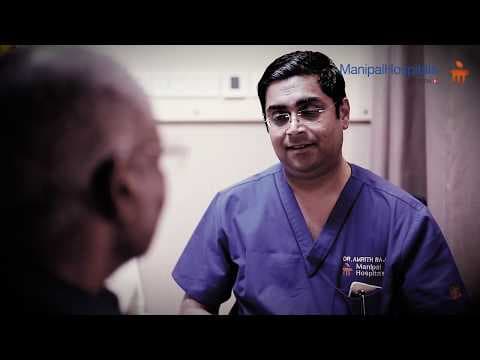
Robot Assisted Radical Prostatectomy
A miraculous Procedure, Robot Assisted Radical Prostatectomy done by Dr. Amrith Raj Rao, Consultant - Urology And Robotic Surgery...
With a legacy of several decades, Manipal Hospitals is one of India's leading multi-speciality healthcare networks. We deliver comprehensive outpatient, inpatient, emergency, and advanced surgical care tailored for patients of all age groups.

Not sure what you're looking for?
A ventilator is a medical device that assists or takes over breathing when a patient cannot breathe adequately on their own. It acts like mechanical bellows, moving oxygen-rich air into the lungs and helping remove carbon dioxide.
Ventilator support is typically needed when a patient has severe respiratory failure, is recovering from major surgery under general anaesthesia, has a serious lung or neurological condition affecting breathing, or is a premature newborn with underdeveloped lungs. The decision is made by the treating doctor based on oxygen levels, breathing effort, and overall condition.
A ventilator delivers a controlled volume or pressure of air, mixed with oxygen, into the lungs at set intervals. Sensors on the machine continuously track the patient's breathing rate, oxygen saturation, and lung pressure, allowing the care team to adjust settings as the patient's condition changes.
No. While ventilator machine usage is most common in the ICU (adult, paediatric, and neonatal), ventilators are also used in operating theatres during surgeries performed under general anaesthesia to support breathing while the patient is under anaesthetic effect.
The duration varies widely depending on the underlying condition, from a few hours during and after surgery to several days or weeks for patients with severe respiratory illness. Doctors aim to reduce ventilator support gradually (weaning) as soon as the patient can safely breathe on their own.