

Baner

4.3
High-tech cath lab procedures designed for minimally invasive heart treatments.
A cardiac catheterisation lab, commonly known as a "cardiac cath lab," is a highly specialised hospital unit where doctors perform minimally invasive diagnostic tests and advanced procedures to treat cardiovascular diseases. Equipped with advanced imaging technology, the lab allows medical teams to visualise arteries and precisely evaluate blood flow to and from the heart. This real-time data helps the care team accurately diagnose and immediately treat blockages in the heart's blood vessels. Because these cath lab procedures utilise advanced, minimally invasive techniques, they are safe and carry a low risk of major complications.
A Cath Lab is a high-tech procedure room where specialized doctors diagnose and treat heart conditions using minimally invasive techniques. Instead of performing open-heart surgery, cardiologists guide tiny, flexible tubes called catheters through your blood vessels directly to the heart.
The process is guided by advanced, real-time X-ray imaging (fluoroscopy). By injecting a safe contrast dye through the catheter, doctors can clearly visualise your coronary arteries on digital screens. This high-definition mapping instantly pinpoints narrowings, blockages, or structural issues.
If a blockage is found, the doctor can immediately perform an intervention, such as inflating a tiny balloon to open the artery (angioplasty) and placing a mesh tube (stent) to keep it open. This powerful combination of diagnostic imaging and immediate treatment restores healthy blood flow quickly, safely, and with minimal recovery time.
The most common cath lab procedures include coronary angiograms, which use dye and X-rays to detect blockages in blood vessels, and angioplasty with stenting to physically open clogged arteries and restore blood flow. Additionally, specialists in the lab routinely perform pacemaker and defibrillator implantations to regulate irregular heartbeats, catheter ablations to correct abnormal heart rhythms, and advanced, minimally invasive heart valve repairs or replacements (such as TAVR) that completely bypass the need for traditional open-heart surgery.
4.3
A cardiologist reviews the patient’s medical history, symptoms, and heart scans to determine if a Cath Lab procedure is required. They will explain the procedure, answer questions, and discuss what to expect during hospital visits.
| Parameter | Advanced Technology (Cath Lab Procedure) | Conventional Approach (Open-Heart Surgery) |
|---|---|---|
| Precision | Utilises micro-catheters and guide wires for millimeter-level accuracy, allowing for the precise placement of stents and targeted treatment of blockages. | While surgeons are highly skilled, the procedure involves direct manual intervention on a larger scale, which is inherently less granular than catheter-based work. |
| Visualisation | Employs advanced real-time X-ray imaging (fluoroscopy) and 3D mapping to provide a live, dynamic view of blood flow and the heart's internal structures. | Relies on the surgeon's direct, external view of the heart. It does not offer a real-time visualisation of blood flow dynamics within the coronary arteries. |
| Invasiveness | Minimally invasive, requiring only a small puncture in the wrist or groin to insert a catheter. This avoids large surgical incisions and trauma to the chest wall. | Highly invasive, requiring a large incision through the chest and sternum (sternotomy) to gain direct access to the heart, often requiring a heart-lung bypass machine. |
| Recovery | Significantly faster and less painful recovery. Patients often go home the next day and can return to normal activities within about a week with minimal scarring. | Involves a long and demanding recovery period, including several days in intensive care and weeks to months of rehabilitation before returning to normal life. |
| Patient Experience | Patients are often awake with mild sedation. The procedure is quicker, less painful, and has a lower risk of complications like infection, resulting in less stress and anxiety. | A major surgical event under general anesthesia with significant post-operative pain, a large visible scar, and a more emotionally and physically taxing recovery process. |


Discover stories of
We leave no stone unturned in exploring alternate treatment options for our patients. Our multidisciplinary teams deliver advanced, personalised care focused on restoring health and empowering patients to overcome serious medical challenges and regain their lives.
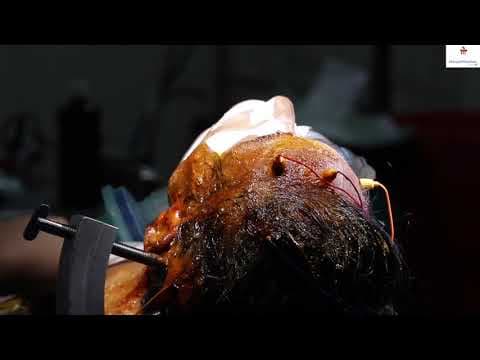
Robot Assisted Radical Prostatectomy
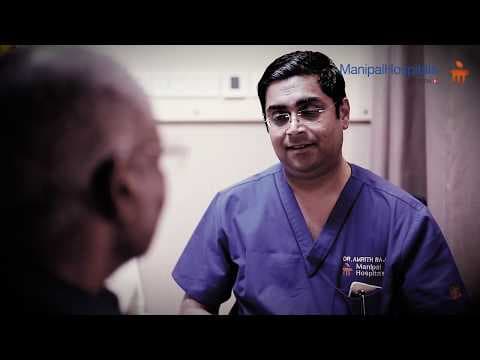
Robot Assisted Radical Prostatectomy
A miraculous Procedure, Robot Assisted Radical Prostatectomy done by Dr. Amrith Raj Rao, Consultant - Urology And Robotic Surgery...
With a legacy of over several decades, Manipal Hospitals stands as one of the top multi-speciality healthcare networks in India. Our hospitals prioritise clinical excellence by providing services including outpatient, inpatient, emergency, and surgical care across various medical specialties for patients of all age groups. At Manipal Hospitals, our state-of-the-art technology is backed by highly experienced specialists and a focussed commitment to patient safety at every step.

Not sure what you're looking for?
Most routine catheterization procedures are performed under local anesthesia and mild conscious sedation. You will feel relaxed and comfortable, but able to follow simple instructions from the care team. Complex or structural heart procedures may require general anesthesia.
Modern Cath Labs utilise ultra-low-dose X-ray technology, automated dose controls, and digital flat-panel detectors to minimize radiation exposure to both the patient and the medical team while maintaining high image clarity.
Diagnostic procedures like a coronary angiogram typically take 30 to 45 minutes. Interventional procedures, such as angioplasty, stenting, or EP ablations, usually take between 1 to 3 hours depending on complexity.
Cath Labs utilize high-definition biplane fluoroscopy (real-time X-ray imaging) combined with contrast dye injected into the bloodstream. This creates clear, dynamic videos of blood flow and vessel blockages on high-resolution overhead monitors.
Traditional operating rooms are designed for open surgical procedures requiring large incisions. A Cath Lab is tailored specifically for image-guided, keyhole interventions using thin flexible tubes (catheters) inserted through a small puncture in the wrist or groin.