


Understanding Hair Loss in Women: Common Causes, Symptoms, and When to See a Specialist
Reviewed by: Dr. Ravi S
Posted on
8 Min Read

Not sure what you’re looking for?
Get in touch with our representatives for help!
Contact UsSudden hair changes such as increased hair fall or hair-thinning, can feel unsettling when they appear without warning. Many women notice strands on the pillow or thinning around the parting and wonder what started it. This blog shares details shared by experts from a top dermatology hospital in Mysore about what might be triggering these changes and how women can understand them better.
What do you mean by hair loss in women?
It is common to shed some hair daily; it is completely normal. But when the shedding increases or patches become visible, it is something of concern. This shift may appear gradually for some and quicker for others. It can affect the way someone feels about their hair and overall comfort.
Common signs that show a change in hair growth
Women often sense early signals before clear thinning shows up. These small clues appear in daily routines and help people understand what might be happening with their scalp.
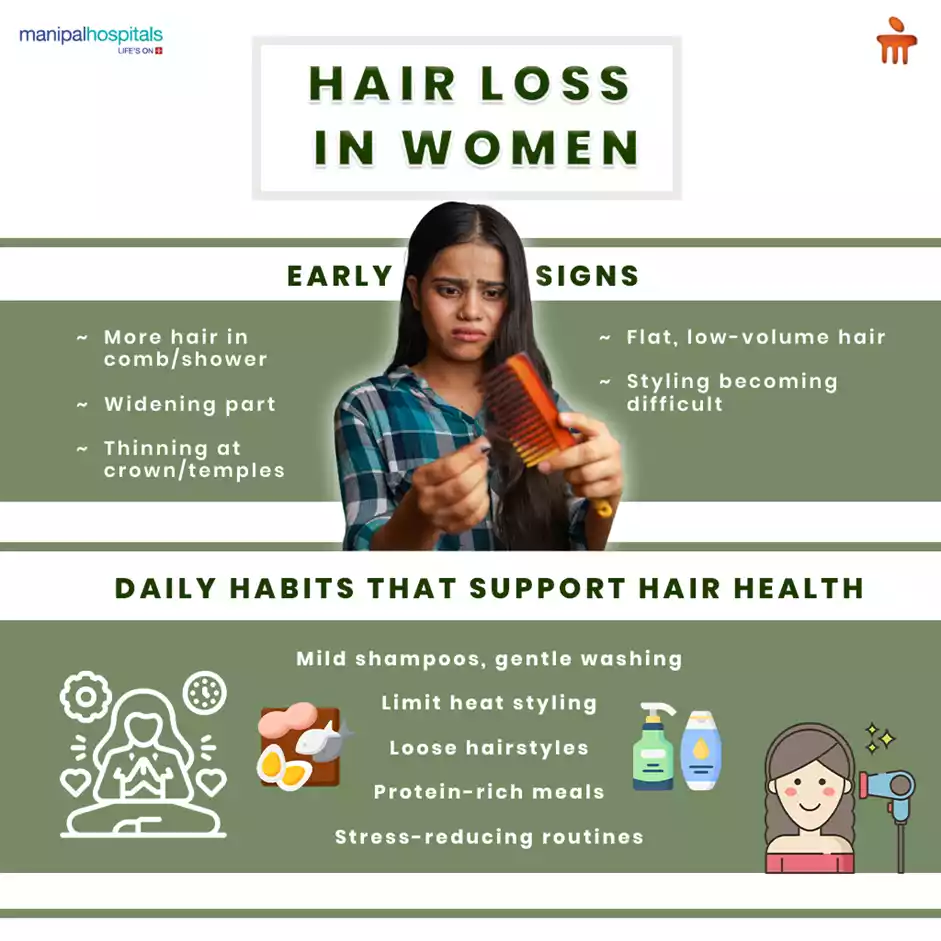
Here are some signs that point to changes:
-
More strands collecting on the comb
-
A wider parting line that slowly expands
-
Hair feeling sparse around the crown
-
Noticeable thinning around the temples
-
Reduced volume that stays the same even after drying
Many women first notice that styling takes more time. It might feel like the hair behaves differently, even though nothing else in daily life has changed.
Causes of hair loss in women
Understanding the causes of hair loss in women helps people understand the symptoms. The body responds to many internal and external factors. These triggers affect the hair cycle and may slow down new growth. Some causes appear mild while others need medical guidance. Women often find relief once they know why shedding is happening.
-
Hormonal causes: Hormonal changes are a common reason behind what causes hair loss in women. Shifts during perimenopause, thyroid imbalance, pregnancy, or contraceptive changes may influence hair growth. Hormones help regulate the cycle. When hormones shift from their usual levels, thinning may follow. Some women notice this within a few months of internal changes. In other words, hair reacts to small fluctuations that occur beneath the surface.
-
Stress and lifestyle factors: Stress can interrupt natural rhythms and affect the way hair grows. This form of shedding often begins after emotional strain or physical exhaustion. Sleep challenges may add to the pattern. Nutritional gaps also play a part. Diets low in protein or iron may contribute to causes of hair loss in women.
-
Hereditary changes and family patterns: Some women have a genetic tendency that shapes their hair density over time. This is known as female pattern baldness. It appears slowly and often starts with a widening part line. Women with this condition may notice gradual thinning over several years. Although it progresses with time, treatment options help manage it. Think of it as a pattern the body follows based on inherited traits.
-
Health conditions that affect growth: Some conditions influence the way hair grows. Thyroid concerns, low iron, or autoimmune shifts might contribute to causes of hair loss in women. These conditions affect how the body processes nutrients or energy. When hair does not receive enough support, thinning begins.
How does hair loss appear across different ages?
Hair loss is not limited to one life stage. Women of all ages may experience thinning. The reasons vary, yet the feelings around it remain similar. Younger women might link it to stress or hormonal shifts. Women in midlife often relate it to natural transitions. It helps to look at how age interacts with hair changes.
-
Hair changes in younger women: Women in their twenties and thirties might see shedding linked to stress, diet shifts, or contraceptive adjustments. Hormonal variations are common in this stage. Many women also juggle demanding routines that influence sleep patterns. These factors may lead to temporary thinning and can improve once the body returns to balance.
-
Hair changes during midlife: Women in their forties and fifties may notice changes linked to perimenopause or menopause. This stage brings hormonal shifts that influence the cycle. Shedding might increase, or the texture may feel different. Some experience hormonal hair loss in women during this time.
Understanding female pattern baldness
Female pattern baldness is a common cause of thinning. First, many women see a wider parting or reduced density on the crown. It differs from male hair loss, as women rarely lose all hair in one area. The thinning spreads slowly and remains steady over the years. Treatment can improve the appearance when started early.
Features that suggest this pattern
This pattern often shows signs such as
-
Gradual thinning around the crown
-
A parting that opens wider
-
No complete bald patches
-
Slow changes that continue over years
Women may feel worried when they recognise these signs. It helps to know that this pattern is manageable with early support.
How do hormones influence hair growth?
Hormones affect nearly every part of the hair cycle. Oestrogen and progesterone help maintain density. When levels drop, thinning becomes noticeable. This process is why hormonal hair loss in women appears during menopause or after childbirth. Thyroid hormones also play a role in the hair cycle and may influence what causes hair loss in women. Hair thrives when hormone levels remain balanced. When they shift, the cycle moves in a different direction.
Common hormonal Triggers
Some triggers include:
-
Post-pregnancy changes
-
Thyroid fluctuations
-
Menopause transitions
-
Contraceptive adjustments
Each trigger influences the timing of shedding. Women often sense that something feels different during these stages. A simple way to explain this is that hormones act like quiet organisers for hair routines.
Daily Habits That Support Healthy Hair
Small habits can gently support hair growth. These steps do not replace medical advice. They simply offer ways to keep hair in a supportive environment. Many women find that simple changes lift confidence while they explore treatments.
Gentle Care Practices
Try the following:
-
Regular washing with mild shampoos
-
Avoiding frequent heat styling
-
Keeping hairstyles loose
-
Eating balanced meals with protein
-
Reducing stress through small relaxation routines
These habits build a more stable foundation for hair to grow. They also give women a feeling of control during uncertain phases.
When should you consult a dermatologist?
Women often wonder when it is time to speak with a specialist. The right moment is when shedding feels different from usual routines. Consulting an expert helps identify what causes hair loss in women and guides treatment. Many women feel more at ease once a specialist explains the cause.
Signs That Suggest Medical Attention
You may consider visiting a specialist if you notice:
-
Rapid thinning that continues for weeks
-
Bald patches that appear suddenly
-
Persistent itching or redness
-
Shedding accompanied by tiredness
-
A family history of female pattern baldness
These signs point to the value of early assessment. Women often feel clearer once they understand the reason behind their symptoms
How Do Specialists Assess Hair Loss?
A specialist looks at the scalp, the thinning pattern, and overall health. These steps help form a simple understanding of causes of hair loss in women. Blood tests might be suggested to check for thyroid levels or nutrient gaps. In some cases, photographs track how the hair changes over time.
Types of treatments for hair loss
While treatments differ, some common options include:
-
Nutrient support
-
Topical solutions
-
Medications for certain patterns
-
Lifestyle modifications
-
Scalp therapies
Each option depends on the cause. A specialist helps women choose a plan that feels comfortable and realistic.
Why Early Support Makes A Difference
Hair responds slowly, which means early action makes changes easier to manage. Women who seek guidance at the first sign of thinning often see better results. Early assessment identifies whether the cause is hormonal, genetic, or lifestyle-related. It also helps women stay calm during the process.
Living with hair changes
Hair loss affects more than appearance. It touches emotions and shapes how women feel each morning. Many women say the hardest part is not knowing what will happen next. Understanding what causes hair loss in women helps reduce uncertainty. It helps women see that hair loss is common and manageable.
Building confidence through support
Support from family, friends, and qualified specialists can make these changes easier to navigate. Talking about hair concerns helps people feel less overwhelmed. Women often feel stronger when they realise that many others go through similar experiences. It is helpful to remember that shared understanding brings comfort.
Conclusion
If hair thinning continues or feels worrying, connecting with experts brings reassurance. The dermatology team at Manipal Hospitals Mysore offers guidance and personalised care. They help women understand the cause and create a plan that suits their needs. Many women feel more hopeful once they receive structured advice from trusted professionals. Book an appointment now or visit our Dermatology department at Manipal Hospitals Mysuru today!
Frequently Asked Questions
If you see more strands on your brush or your parting looks wider, it may be a sign. Sudden changes often mean the hair growth cycle is reacting to something inside the body. A simple check with a specialist can clarify what is happening.
Yes, female pattern baldness has treatments that help slow the thinning and support new growth. Results take time because hair responds slowly. Early care usually brings better outcomes.
Hormonal changes often play a strong part in shedding. Many women experience hormonal hair loss in women during menopause, after childbirth, or due to thyroid shifts. Understanding this link helps you make sense of sudden changes.
Some common triggers include stress, genetics, iron levels, and hormone fluctuations. These factors influence how hair grows and falls. When you know the causes of hair loss in women, it becomes easier to choose the right support.
You should visit a specialist when shedding continues for weeks or feels unusual for your routine. Rapid thinning or visible patches also need attention. Early guidance brings clarity and helps build a practical plan.
Share this Article


Recent Blogs

Understanding Metallic Taste in the Mouth: A Kidney's Silent Signal?
19 Jun 20268 Min Read
Have you ever experienced a strange, persistent metallic taste in your mouth? While often benign, this peculiar sensation, medically known as dysgeusia, can sometimes be a subtle yet significant indicator of underlying health issues. There are several causes of metallic taste in the mouth, and one of them is kidney dysfunction. In this blog an experienced nephrologist in Mysuru discusses in detail what a metallic taste in the mouth is, the causes, and more importantly, when it might be a sign that your kidneys are trying to tell you something important.
Read NowInsulin Resistance in Women: Early Symptoms You Should Know
17 Jun 20267 Min Read
In the intricate landscape of women's health, certain conditions often go unnoticed until they manifest into more significant concerns. One such silent yet powerful player is insulin resistance. It's a condition where your body's cells don't respond effectively to insulin, leading to elevated blood sugar levels. For many women, understanding the early insulin resistance symptoms in females can be a game-changer, enabling timely intervention and preventing a cascade of health issues. In this blog, an experienced gynaecologist in Mysuru explains in detail the nuances of insulin resistance in women, highlighting the crucial early signs you should be aware of. Recognising these signs of insulin resistance in females is the first step towards taking control of your health journey.
Read NowDecoding Low Blood Pressure: Symptoms, Causes, and When to Seek Expert Help
17 Jun 20269 Min Read
Blood pressure is a vital sign, a fundamental indicator of our cardiovascular health. While high blood pressure often makes the news, low blood pressure, medically known as hypotension, can also be a concern. It's a condition where the force of blood against your artery walls is unusually low. For some, low blood pressure is a normal state, causing no issues. However, for others, it can lead to troubling symptoms and, in severe cases, indicate an underlying health problem requiring immediate medical attention. In this blog, a top interventional cardiologist in Mysore discusses in detail what low BP is, the causes of low BP, identifying the signs of low BP, and when it should be considered a medical concern.
Read NowKidney Pain vs Back Pain: How to Tell the Difference
12 Jun 20266 Min Read
You bend down to pick something up, and a dull ache settles in your lower back. Is it just muscle strain, or could it be something more serious? Many people struggle to tell the difference between back muscle pain and kidney pain, especially at the start. That is because the two can feel surprisingly similar. Back pain is often linked to posture, overuse, or strained muscles, while kidney pain may point to an infection, kidney stones, or another internal issue that needs medical attention. In this blog, a top nephrologist in Mysuru explains the key differences between kidney pain vs back pain, what usually causes each one, and when it is time to see a doctor.
Read NowUnderstanding the Early Warning Signs of Cancer
12 Jun 20265 Min Read
What if noticing a small change today could protect you from something far more serious tomorrow? Many cancers don’t announce themselves loudly at the start. They begin quietly, with subtle symptoms like feeling constantly tired, noticing a painless lump, or a generalised feeling that something just doesn't feel right inside the body. Although they are easy to brush aside, blame on stress, or postpone addressing, they matter. The survival rate for patients with early-stage malignancies (Stage I or II) is two to three times higher than that of patients with later-stage diagnoses. In addition to improving results, early detection frequently makes treatment easier, recovery quicker, and quality of life higher. Through this blog, an experienced cancer surgeon in Mysuru discusses early cancer warning signs of some common cancers seen in India, whose symptoms warrant medical care, and how prompt screening can make all the difference.
Read NowHow to Make Period Headaches Go Away: Tips and Remedies
05 Jun 20267 Min Read
You’re halfway through your day, and suddenly your head starts throbbing, right around your period. Sound familiar? These headaches may feel different from regular ones. At times, they might even feel like migraines. Hormonal fluctuations, particularly changes in oestrogen levels, are commonly responsible for headaches experienced during menstruation. These headaches are common but can be annoying and challenging to manage. You might notice it starts right before your period or on day one; that pattern matters. The good news is that you can lessen the frequency and severity of headaches during periods by learning more about why they happen and using some simple home remedies. In this blog, we bring you clinical insights from a top gynaecology hospital in Mysuru that explain the causes, symptoms, and useful ways to deal with them.
Read NowCOPD vs Asthma: Understanding the Key Differences
05 Jun 20267 Min Read
The ease of breathing is something we rarely notice until something is not right. When breathing becomes a struggle, even the simplest moments can feel overwhelming. Asthma and COPD are common breathing problems affecting millions of people worldwide. Still, many people ask, “Are COPD and asthma the same?” Although both conditions involve airflow limitation and breathing difficulties, they are not identical. It becomes crucial to know about the difference between COPD and asthma in order to diagnose them in a timely manner and treat them properly. In this blog, a leading pulmonologist in Mysuru explains in detail about COPD and asthma including the causes, symptoms, and how to differentiate between the two.
Read NowIs IVF Painful? What to Expect During Fertility Treatment
22 May 20267 Min Read
It can be challenging to start fertility treatment, especially when you keep asking yourself, "Is IVF painful?" This worry is a big source of stress for many couples, even before the process starts. The truth is, IVF (in vitro fertilisation) is usually not very painful. However, it does involve a number of medical steps that could cause mild discomfort at different points. Knowing what really happens during the process can help you get ready in both your body and mind. In this blog, a top reproductive medicine and IVF specialist in Mysuru explains each step of IVF, answers the question "Is IVF a painful process?" and tells you what kind of pain (if any) to expect. Most patients describe IVF as manageable, though some steps can feel moderately uncomfortable depending on individual sensitivity.
Read NowUnderstanding Fatty Liver Disease: A Gastroenterologist’s Guide to Diagnosis and Care
06 May 20267 Min Read
The problem of fatty liver disease is on the rise, more prevalent in city-dwelling individuals living a sedentary lifestyle. Although initially, it might seem innocuous, leaving the condition unchecked could be dangerous in the long run. Fatty liver causes, symptoms, and treatments are all necessary factors that must be considered to maintain the health of your liver. Through this blog a top gastroenterologist in Mysuru discusses fatty liver, where the focus will be on the diagnosis, risks, and treatment of fatty liver disease. It also addresses practical concerns such as how to reduce fatty liver quickly and prevent long-term damage.
Read NowHeart Attacks in Young People: Early Warnings, Risk Factors and How to Stay Safe
06 May 20267 Min Read
In recent years, cardiologists have been seeing a steady rise in heart attacks in young people, especially those under 40 years. This trend is concerning because many of these events happen without warning and lead to tremendous suffering and loss of young people. Understanding the cause of a heart attack at a young age is important for prevention. Factors like a sedentary lifestyle, stress, and co-existing health conditions can increase the risk. This blog an experienced cardiologist in Mysuru, explains the causes of myocardial infarction among youth, early warning signs, and ways to reduce the risk.
Read Now