


Can Multivitamins Cause Kidney Problems: Complete Medical Guide
Reviewed by: Dr. Thimmaiah K A
Posted on
8 Min Read

Not sure what you’re looking for?
Get in touch with our representatives for help!
Contact UsCould the daily supplements meant to keep you healthy actually harm your kidneys? Multivitamins are widely used, but the multivitamin side effects on the kidneys are a real concern for some people. Kidneys filter blood and remove excess substances; taking large or inappropriate doses of certain vitamins and minerals can increase the kidneys’ filtering load, change urine chemistry, or even contribute to stone formation.
In this blog a top urologist in Mysore explains which are some of the supplements that pose risk, how often problems occur, who is most vulnerable, and practical steps to use multivitamins safely.
What are Multivitamins?
Multivitamins are supplements that include a blend of important vitamins and sometimes minerals necessary for normal growth, metabolism, and overall health. People often take them when their regular diet does not supply enough nutrients.
-
Help support immune function, energy production, bone strength, and tissue repair.
-
Available in formulations tailored to age, gender, lifestyle, or medical conditions.
-
Intended to supplement dietary intake rather than replace healthy, balanced nutrition.
The answer to the question "Do multivitamins affect kidneys?" is yes. depends on dose, formulation, and individual kidney function.
How Kidneys Handle Vitamins and Supplements
Kidneys filter water-soluble substances and help excrete excess. Two simple points matter:
-
Water-soluble vitamins (B vitamins, vitamin C): excess is usually excreted in urine, but very high doses can still create problems (for example, vitamin C converting to oxalate).
-
Fat-soluble vitamins (A, D, E, K) and minerals (calcium, iron) can accumulate in the body and cause toxicity if taken in excess; the kidneys and liver remove some of these byproducts but cannot prevent all harm when doses are very high.
Understanding these pathways clarifies why some multivitamin ingredients carry higher multivitamin side effects on kidney risk than others.
Can Multivitamins Cause Kidney Problems?
Multivitamins are commonly used to support nutrition and prevent deficiencies. When taken in the suggested amounts, they are usually safe for people with healthy kidneys. However, excessive intake, prolonged unsupervised use, or consumption by people with underlying kidney conditions can increase the likelihood of complications.
Nutrients Commonly Associated with Concern
Vitamin C (Ascorbic Acid)
-
High doses (usually >2 g daily) increase urinary oxalate, a building block for calcium oxalate stones.
-
The question, "Can multivitamins cause kidney stones?” often centres on vitamin C concentration. For most people, modest vitamin C in multivitamins is safe, but high-dose supplements raise risk, especially if urine is concentrated.
Vitamin D and Calcium
-
Excess vitamin D increases calcium absorption; combined with high calcium intake, this may raise blood calcium and urine calcium (hypercalciuria), increasing stone or calcification risk.
-
Long-term high-dose vitamin D without monitoring can stress the kidneys in susceptible individuals.
Vitamin A and Other Fat-Soluble Vitamins
-
Chronic, very high vitamin A can be toxic to the liver and indirectly affect kidney function, though direct kidney failure from vitamin A alone is rare.
-
Fat-soluble vitamins accumulate; cautious dosing matters.
Minerals: Calcium, Phosphorus, Iron
-
Excess calcium supplements can contribute to stones in susceptible people.
-
High phosphorus intakes (from some formulations or additives) can affect mineral balance if kidney function is already reduced.
Iron supplementation rarely harms the kidneys directly but requires monitoring.
Herbal Additions and Unregulated Formulations
-
Some herbal ingredients and unregulated products contain nephrotoxic compounds or contaminants.
-
Combining multiple supplements raises the risk of exceeding safe levels.
These ingredient-specific concerns explain how and why multivitamin side effects on the kidneys occur in particular situations.
Factors that may increase risk
-
Use of high-dose or therapeutic-strength vitamin preparations.
-
Taking multiple products with overlapping ingredients.
-
History of kidney stones or chronic kidney disease.
-
Inadequate hydration during supplementation.
Appropriate dosing, awareness of personal risk factors, and professional guidance help ensure that multivitamins provide benefit without unintended harm.
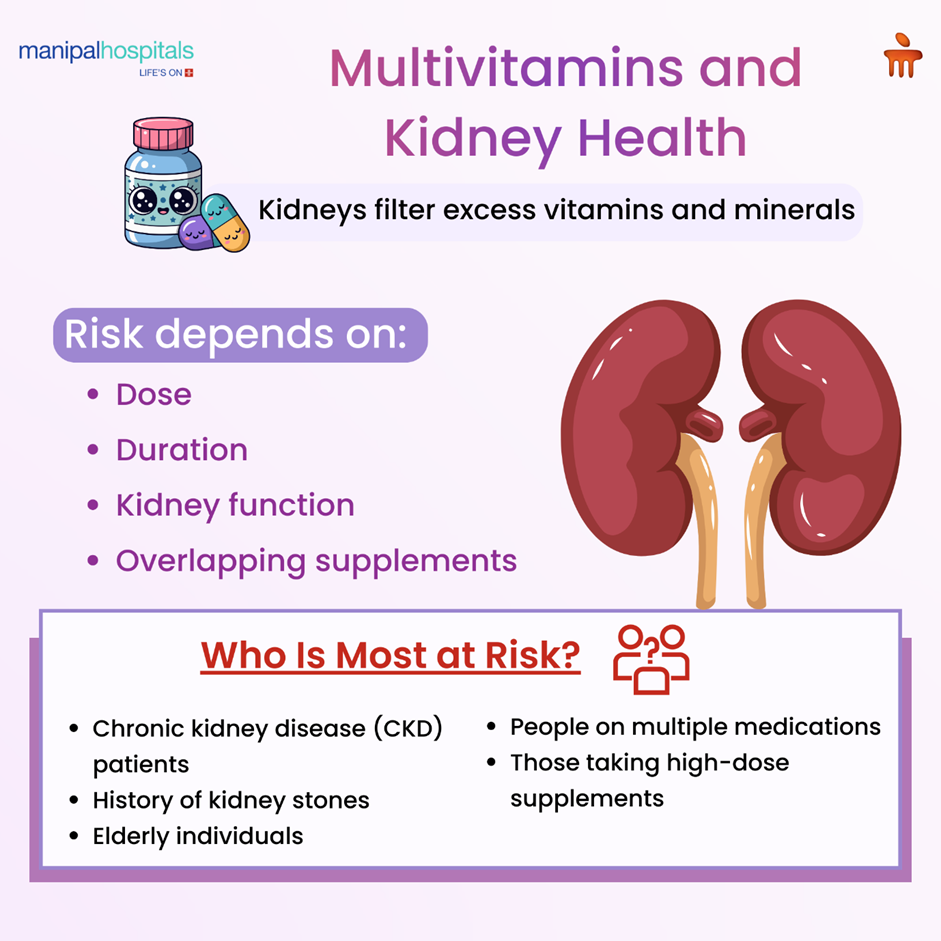
Who is Most at Risk?
-
Not everyone is equally vulnerable. Groups at higher risk of adverse kidney effects include:
-
People with chronic kidney disease (CKD) or reduced kidney function. The kidney’s reduced ability to excrete excess makes dose control essential.
-
Individuals with a history of kidney stones, especially calcium oxalate stones or recurrent stones.
-
People taking high-dose single-nutrient supplements in addition to a multivitamin.
-
Those on medications that affect kidney function (certain blood pressure drugs, NSAIDs, and some antibiotics).
-
Older adults with altered metabolism or polypharmacy.
-
Pregnant people should follow the clinician's guidance. Some multivitamin formulations are intended for pregnancy, while others are not suitable.
Early Signs of Kidney Diseases
Recognising early signs of renal strain can help avoid long-term damage. Even though symptoms may not be obvious at first, some clinical signs need to be looked into.
Some signs that something might be wrong are:
-
Frequent fatigue and weakness.
-
Swollen feet or ankles.
-
Nausea and vomiting.
-
Loss of appetite.
-
Recurrent pain in the back or side.
These symptoms do not always mean there is kidney damage, but they show why it is important to see a doctor to rule out side effects from multivitamins.
Diagnosis and Surveillance
When someone has possible kidney problems related to supplements, kidney specialists do a full check-up. Some common tests for diagnosis are:
|
Procedure |
What Is It Called |
What it Does |
|
Blood Tests |
Serum creatinine, eGFR, BUN |
Measures the kidney’s function. |
|
Urine Tests |
Urinalysis, Albumin-to-Creatinine Ratio (ACR) |
Detects kidney damage. |
|
Imaging Studies |
Ultrasound, CT, MRI |
Identifies structural abnormalities, cysts, or urinary tract obstructions. |
|
Kidney Biopsy |
Histopathology of renal tissue |
Identifies glomerular or interstitial diseases. |
|
Electrolyte Monitoring |
Sodium, potassium, and bicarbonate levels |
Detects kidney imbalances. |
|
Specialised Tests |
Renal scintigraphy, genetic testing |
Identifies hereditary kidney conditions. |
How to Lower Risk When Using Multivitamins
Follow these practical steps:
-
Check doses—choose multivitamins that provide close to recommended daily allowances, not mega-doses.
-
Read labels—note vitamin C, vitamin D, and calcium amounts; avoid overlapping products that push totals too high.
-
Stay hydrated—dilute urine to reduce crystal concentration and stone risk.
-
Discuss with a clinician—especially if there is CKD, prior stones, pregnancy, or multiple medications.
-
Prefer food first—dietary sources reduce the need for high-dose supplements.
-
Use tested brands—choose reputable, regulated manufacturers to avoid contaminants.
-
Monitor labs—if you take high-dose supplements, check renal function and serum minerals periodically.
Conclusion
Multivitamins are important for keeping your health in excellent shape, but taking them incorrectly can cause kidney problems, especially in people who are already at risk. Using supplements in moderation and under a doctor’s guidance is the safest approach. Watch for symptoms, schedule regular checkups, and seek kidney health and supplements advice in Mysuru from specialist at Manipal Hospital to ensure safe use. With informed choices and expert supervision, supplements can support well-being without placing unnecessary strain on the kidneys.
Frequently Asked Questions
Excess intake or long-term unsupervised supplementation can increase kidney stress and disrupt fluid and electrolyte balance, particularly in individuals with pre-existing risk factors or reduced renal reserve.
People with diabetes, high blood pressure, or chronic kidney disease should not consume them without a prescription. Consult your doctor and inform them about your underlying conditions for the best outcome.
People at risk for kidney stones may be affected by high vitamin C, calcium, or vitamin D intake. Adequate hydration, correct dosing, and regular monitoring help reduce complications.
Some warning signs include less urine, swelling, ongoing tiredness, nausea, or repeated pain in your side. If you notice these symptoms, see a doctor immediately.
People can speak with nephrology specialists at Manipal Hospital. Mysuru about kidney health and supplements. They offer advanced diagnostic facilities and personalised advice for a healthy kidney.
Share this Article


Similar Blogs

Prevention and Cure for Prostate Enlargement
1 Min Read
Males who are over 50 are more likely to experience prostate enlargement than younger men. People with prostate enlargement may have a slow urine flow, suffer from soreness while passing urine, and feel as though their bladder is not emptying completely. People, who are suffering, more often at night, usually get out of bed because they feel the urgent need to use the restroom. Additionally, they experience pain while urinating, and in extreme circumstances, they may occasionally pass blood in their urine and also experience trouble while urinating. And if the prostate enlargement is extreme, some people experience complete urine retention and end up needing emergency medical attention because they are unable to pass urine. Therefore, it is best to visit a urologist in Mysore if anyone has these symptoms, so the expert may perform a basic physical exam, an ultrasound, and a urine test to determine whether or not you have an enlarged prostate. Prevention from Prostate Enlargement It is well known that everybody over the age of 50 will undoubtedly experience these conditions since the enlargement of the prostate is a natural part of aging. Hence, it is recommended to get a serum blood test (prostate-specific antigen blood test) done, which can help a person learn the condition of the prostate. If the illness is discovered early, medication can be used to treat the patient. One might need to have the prostate treated with a laser if it worsens. Although lifestyle modifications cannot prevent prostate enlargement, they may still be beneficial for the prostate. There are some indications that maintaining a low-fat diet, losing weight, having routine exercise, and getting an ultrasound may be beneficial. Additionally, exercise can help in the regular emptying of your bladder. By following the below measures, one can be able to manage the occurrence of prostate enlargement or its symptoms, Regular exercises to make the pelvic floor muscles stronger. Reduce fluid intake, especially before leaving the house or going to sleep. During cold and allergy outbreaks, avoid or limit the use of decongestants and antihistamines, as they tighten the muscles that control urine flow and make it more difficult to urinate. Limit your caffeine and alcohol intake because they can irritate the bladder and cause you to urinate more frequently. It is better for the bladder if a person urinates as soon as they feel the urge. Treatment Measures Usually, the urologist initially prescribes medications if the prostate enlargement is quite minor and will monitor the sufferer's progress while consuming them. Urologists during prostate enlargement treatment in Mysore usually advise undergoing laser prostatectomy, a very innovative, simple, and direct procedure that can treat the enlarged prostate if the enlargement of the prostate is severe and if there are severe problems like retention of urine or blood in the urine, being unable to pass urine, getting recurrent urinary infections, or having a lot of residual urine left out in the bladder even after passing urine. The benefits of a laser prostatectomy include little blood loss, a quick recovery, a short hospital stay of one or two days, and the ability to resume regular routines early. Thus, a laser prostatectomy can totally eliminate the condition of an enlarged prostate while also accelerating recovery. Dr. Dinesh Kumar T P Consultant - Urology and andrology and kidney transplant surgeon Manipal Hospitals, Mysore
Read NowObstructive Uropathy – What Everyone Must Know About Urinary Problems Beyond Infections
27 Feb 20265 Min Read
Urinary discomfort, although bothersome, does not gain serious attention from many people. The symptoms are either neglected until they get severe to the point of no return or are treated as a routine urine infection. While many cases are indeed simple UTIs, some symptoms point to a deeper concern, known as obstructive uropathy, a condition where urine flow is blocked somewhere along the urinary tract. When left unrecognised, this blockage can quietly strain the kidneys and lead to long-term damage. Through this blog, a renowned urologist in Mysore explains what obstructive uropathy is, how it affects the urinary system, common obstructive uropathy causes, recognising obstructive uropathy symptoms, and the importance of knowing when to seek obstructive uropathy treatment. With timely medical attention, especially through specialised obstructive uropathy care in Mysore, most patients experience significant improvement and, in many cases, full recovery.
Read NowKidney Stone Symptoms in Women: Early Signs You Should Not Ignore
27 Feb 20267 Min Read
Although pain caused by kidney stones is one common experience shared by women and men, in women, it may often be mistaken for menstrual pain or other gynaecological problems. In this blog a top urologist in Mysuru shares some useful clinical insights on how to recognise kidney stone symptoms in women early so you can avoid complications and get the right treatment before the pain worsens.
Read NowGout: Understanding Causes, Symptoms, and Treatment Options
25 Mar 20255 Min Read
Gout is a type of arthritis characterised by the buildup of urate crystals in the joints, leading to sudden and severe pain, swelling, redness, and tenderness. These crystals form when there are high uric acid levels in the blood, a condition known as hyperuricemia. Uric acid is produced when the body breaks down substances called purines, which are found naturally in the body and in certain foods and drinks. While gout attacks can be intensely painful, the condition is manageable with appropriate gout treatment and lifestyle modifications. In this blog, an expert urologist discusses gout in detail.
Read NowProstate Cancer Explained: Risk Factors, Diagnosis, and Treatment Options
26 Nov 20245 Min Read
Prostate cancer develops when abnormal, malignant cells begin to grow uncontrollably in the prostate gland, a tiny, walnut-shaped gland present below the bladder in males. Sperm are nourished and transported by the seminal fluid produced by the prostate. This fluid significantly contributes to the reproductive health of men. Prostate cancer is one of the most common cancers diagnosed in men, especially those who are above 50 years. In this blog, a top urologist in Mysuru shares some basic facts about prostate cancer, including its causes, symptoms, risk factors, and how to reduce the risk of getting this condition.
Read Now5 Common Urological Problems
22 Jul 20243 Min Read
What are Urological Problems? Urological issues are health problems that involve the urinary system and the male reproductive system. Many of these health issues can affect individuals of both sexes. This blog provides a discussion of five urological disorders commonly seen, their respective causes, symptoms, and management strategies. Urinary Incontinence Urinary Tract Infection Kidney Stone Disease Erectile Dysfunction Enlarged Prostate
Read NowPaediatric Urology: Common Conditions And Treatments
23 Apr 20244 Min Read
Treating urological conditions in children can be tricky and necessitates specific knowledge and training. Urological conditions in children can sometimes be congenital (present at birth) and diagnosed during infancy or even prenatally. Other urological conditions can develop during childhood. Let’s help you understand everything you must know about paediatric urology.
Read NowProstate Problems: What Every Man Should Know
29 Jan 20244 Min Read
Prostate problems are becoming a common complication in older men. The prostate gland is present between the bladder and the rectum. It produces a fluid that plays an important role in male reproductive health. The fluid produced nurtures and transports sperm. From benign growths to more serious concerns like inflammation and cancer, there are various problems associated with the gland. Thankfully, a spectrum of treatments is available targeting specific issues at hand. So let’s explore these common prostrate problems and address the solutions available to them.
Read NowBasics To Know About Holmium Laser Enucleation Of The Prostate (HoLEP)
29 Jan 20243 Min Read
Benign prostatic hyperplasia (BPH) generally occurs in older men. As you age, your hormone levels change. This leads to non-cancerous growth of the prostate gland. Symptoms of such conditions may include: Frequent urination Hesitancy in urination Nocturia The medical community has developed new treatments for BPH. One such technique is Holmium Laser Enucleation of the Prostate (HoLEP). In this article, we will explore further how urology interventions have improved using this approach. BPH Indications When you have BPH, your prostate gland starts to worsen gradually. This affects your urethra and prevents you from urinating normally. Such a condition indicates the need for HoLEP. By being able to remove the tissues precisely, HoLEP can cure this obstruction.
Read NowUnderstanding Urinary Incontinence
27 Jul 20234 Min Read
The involuntary passing or leaking of urine is known as urinary incontinence and is a relatively prevalent issue. Both men and women experience it, but women do it more frequently than males. Damage to or weakening of the muscles that help control urination and the bladder are the main causes of incontinence. We go over the signs, kinds, causes, and treatments of urine incontinence in this health article. Symptoms of Urinary Incontinence Urine leaks or accidental involuntary passage Frequent urination Inability to hold pee Inability to pass urine fully Passing a few drops of urine after you thought you were done passing urine. Types of Urinary Incontinence Stress Incontinence The cause of urinary incontinence can be triggered by stress and occurs when the urethra, the tube through which pee leaves the body, is less able to remain closed when the bladder fills with urine. The pressure inside your bladder rises when it becomes filled with urine. Any sudden strain on the bladder, such as that caused by sneezing, coughing, laughing, or physical activity, might result in inadvertent pee leakage or passage if the urethra is weak. The urethral sphincter and pelvic floor muscles are the main causes of a weak urethra. The following circumstances can lead to pelvic floor muscle damage: Vaginal childbirth (normal delivery) Accidental injury during any abdominal surgical operations. Increased strain on the stomach due to situations like pregnancy and obesity Diseases of the nervous system (neurological conditions) Diseases of the connective tissues. Urge Incontinence Incontinence brought on by an overactive or injured detrusor muscle, which governs the urge to urinate, is known as urge incontinence. Urge or need incontinence occurs when the detrusor muscle contracts too frequently, leading to an uncontrollable need to pass pee or even urine leakage. Normally, the detrusor muscle extends itself to enable the storage of urine within the bladder and only contracts when you go to pass the urine. The following factors are likely to contribute to urge incontinence: Dehydration Increased use of coffee and alcohol Urinary tract infections Neurological disorders Constipation. Overflow Incontinence Also known as chronic urinary retention, this problem prevents you from passing all of your urine. Any type of obstruction or blockage in the bladder, such as bladder stones, causes this to occur. Urinary urges or leaks are common as a result of the pressure created by the leftover pee around the blockage. Total incontinence As the term suggests, total incontinence is a condition in which the bladder completely fails to hold any urine, causing continual urine passage. Total incontinence can result from: Congenital bladder issues (bladder issues from birth) A bladder fistula, which develops when a tiny tunnel-like hole forms between the bladder and the surrounding tissue Combination of the aforementioned types of incontinence. Medications - Several medications, such as ACE inhibitors and diuretics, antidepressants, hormone replacement therapy, and sedatives, can also result in urine incontinence Other Risk Elements - Advancing years; incontinence in the family; and urinary tract infections Treatment for Incontinence of the Bladder The classification of urinary incontinence treatment at Manipal Hospitals Mysore, is the following: Non-surgical Treatment Non-surgical treatment options include physiotherapy, incontinence products, medicine, lifestyle modifications, and medication. Lifestyle Modification Modifying one's lifestyle to lose weight (in situations of overweight and obesity), increase fluid intake, consume less caffeine and alcohol, etc. Medication Depending on the kind of incontinence and other medical conditions, different types of drugs can be prescribed for the treatment of incontinence. Physiotherapy Pelvic floor strengthening activities such as Kegels, bladder training, and electric stimulation. Incontinence Products There are several products that, while not treating incontinence, do assist in controlling unintentional leaks. These goods include adult diapers, catheters, and absorbent pads. Surgery If non-surgical treatments are unsuccessful, your doctor may recommend surgery. Frequently Asked Questions on Urinary Incontinence 1. Does urinary incontinence occur only in the elderly? Is urinary incontinence an inevitable problem of progressive age? No, urinary incontinence is not confined only to the elderly, and it is neither an inevitable part of ageing. However, the elderly population are more prone to incontinence due to various factors such as weakening muscles, slowing reflexes, declining cognition, hormonal changes, and other health conditions. 2. Who is at risk of developing urinary incontinence? Urinary incontinence can happen in people of any age group and gender. However, it is more common in women when compared to men. Particularly the risk of incontinence is higher in women during pregnancy and after childbirth. In men, the incidence is more common in the elderly age group and in those with prostate issues. 3. What lifestyle modification can help manage urinary incontinence? Some lifestyle changes such as practising exercises that strengthen performing pelvic floor such as Kegel exercises, maintaining a healthy weight to reduce pressure on the bladder, reducing consumption of bladder irritants or products with diuretic properties (increased urine production), and adequate hydration, can prove effective in managing urinary incontinence. 4. Whom should you speak with if you have issues with incontinence? For issues with urine incontinence, you can speak with a gynaecologist, a urologist, or a general practitioner.
Read NowRecent Blogs
Understanding Metallic Taste in the Mouth: A Kidney's Silent Signal?
19 Jun 20268 Min Read
Have you ever experienced a strange, persistent metallic taste in your mouth? While often benign, this peculiar sensation, medically known as dysgeusia, can sometimes be a subtle yet significant indicator of underlying health issues. There are several causes of metallic taste in the mouth, and one of them is kidney dysfunction. In this blog an experienced nephrologist in Mysuru discusses in detail what a metallic taste in the mouth is, the causes, and more importantly, when it might be a sign that your kidneys are trying to tell you something important.
Read NowInsulin Resistance in Women: Early Symptoms You Should Know
17 Jun 20267 Min Read
In the intricate landscape of women's health, certain conditions often go unnoticed until they manifest into more significant concerns. One such silent yet powerful player is insulin resistance. It's a condition where your body's cells don't respond effectively to insulin, leading to elevated blood sugar levels. For many women, understanding the early insulin resistance symptoms in females can be a game-changer, enabling timely intervention and preventing a cascade of health issues. In this blog, an experienced gynaecologist in Mysuru explains in detail the nuances of insulin resistance in women, highlighting the crucial early signs you should be aware of. Recognising these signs of insulin resistance in females is the first step towards taking control of your health journey.
Read NowDecoding Low Blood Pressure: Symptoms, Causes, and When to Seek Expert Help
17 Jun 20269 Min Read
Blood pressure is a vital sign, a fundamental indicator of our cardiovascular health. While high blood pressure often makes the news, low blood pressure, medically known as hypotension, can also be a concern. It's a condition where the force of blood against your artery walls is unusually low. For some, low blood pressure is a normal state, causing no issues. However, for others, it can lead to troubling symptoms and, in severe cases, indicate an underlying health problem requiring immediate medical attention. In this blog, a top interventional cardiologist in Mysore discusses in detail what low BP is, the causes of low BP, identifying the signs of low BP, and when it should be considered a medical concern.
Read NowKidney Pain vs Back Pain: How to Tell the Difference
12 Jun 20266 Min Read
You bend down to pick something up, and a dull ache settles in your lower back. Is it just muscle strain, or could it be something more serious? Many people struggle to tell the difference between back muscle pain and kidney pain, especially at the start. That is because the two can feel surprisingly similar. Back pain is often linked to posture, overuse, or strained muscles, while kidney pain may point to an infection, kidney stones, or another internal issue that needs medical attention. In this blog, a top nephrologist in Mysuru explains the key differences between kidney pain vs back pain, what usually causes each one, and when it is time to see a doctor.
Read NowUnderstanding the Early Warning Signs of Cancer
12 Jun 20265 Min Read
What if noticing a small change today could protect you from something far more serious tomorrow? Many cancers don’t announce themselves loudly at the start. They begin quietly, with subtle symptoms like feeling constantly tired, noticing a painless lump, or a generalised feeling that something just doesn't feel right inside the body. Although they are easy to brush aside, blame on stress, or postpone addressing, they matter. The survival rate for patients with early-stage malignancies (Stage I or II) is two to three times higher than that of patients with later-stage diagnoses. In addition to improving results, early detection frequently makes treatment easier, recovery quicker, and quality of life higher. Through this blog, an experienced cancer surgeon in Mysuru discusses early cancer warning signs of some common cancers seen in India, whose symptoms warrant medical care, and how prompt screening can make all the difference.
Read NowHow to Make Period Headaches Go Away: Tips and Remedies
05 Jun 20267 Min Read
You’re halfway through your day, and suddenly your head starts throbbing, right around your period. Sound familiar? These headaches may feel different from regular ones. At times, they might even feel like migraines. Hormonal fluctuations, particularly changes in oestrogen levels, are commonly responsible for headaches experienced during menstruation. These headaches are common but can be annoying and challenging to manage. You might notice it starts right before your period or on day one; that pattern matters. The good news is that you can lessen the frequency and severity of headaches during periods by learning more about why they happen and using some simple home remedies. In this blog, we bring you clinical insights from a top gynaecology hospital in Mysuru that explain the causes, symptoms, and useful ways to deal with them.
Read NowCOPD vs Asthma: Understanding the Key Differences
05 Jun 20267 Min Read
The ease of breathing is something we rarely notice until something is not right. When breathing becomes a struggle, even the simplest moments can feel overwhelming. Asthma and COPD are common breathing problems affecting millions of people worldwide. Still, many people ask, “Are COPD and asthma the same?” Although both conditions involve airflow limitation and breathing difficulties, they are not identical. It becomes crucial to know about the difference between COPD and asthma in order to diagnose them in a timely manner and treat them properly. In this blog, a leading pulmonologist in Mysuru explains in detail about COPD and asthma including the causes, symptoms, and how to differentiate between the two.
Read NowIs IVF Painful? What to Expect During Fertility Treatment
22 May 20267 Min Read
It can be challenging to start fertility treatment, especially when you keep asking yourself, "Is IVF painful?" This worry is a big source of stress for many couples, even before the process starts. The truth is, IVF (in vitro fertilisation) is usually not very painful. However, it does involve a number of medical steps that could cause mild discomfort at different points. Knowing what really happens during the process can help you get ready in both your body and mind. In this blog, a top reproductive medicine and IVF specialist in Mysuru explains each step of IVF, answers the question "Is IVF a painful process?" and tells you what kind of pain (if any) to expect. Most patients describe IVF as manageable, though some steps can feel moderately uncomfortable depending on individual sensitivity.
Read NowUnderstanding Fatty Liver Disease: A Gastroenterologist’s Guide to Diagnosis and Care
06 May 20267 Min Read
The problem of fatty liver disease is on the rise, more prevalent in city-dwelling individuals living a sedentary lifestyle. Although initially, it might seem innocuous, leaving the condition unchecked could be dangerous in the long run. Fatty liver causes, symptoms, and treatments are all necessary factors that must be considered to maintain the health of your liver. Through this blog a top gastroenterologist in Mysuru discusses fatty liver, where the focus will be on the diagnosis, risks, and treatment of fatty liver disease. It also addresses practical concerns such as how to reduce fatty liver quickly and prevent long-term damage.
Read NowHeart Attacks in Young People: Early Warnings, Risk Factors and How to Stay Safe
06 May 20267 Min Read
In recent years, cardiologists have been seeing a steady rise in heart attacks in young people, especially those under 40 years. This trend is concerning because many of these events happen without warning and lead to tremendous suffering and loss of young people. Understanding the cause of a heart attack at a young age is important for prevention. Factors like a sedentary lifestyle, stress, and co-existing health conditions can increase the risk. This blog an experienced cardiologist in Mysuru, explains the causes of myocardial infarction among youth, early warning signs, and ways to reduce the risk.
Read Now