


Top 5 Facts and Myths About Lupus
Reviewed by: Manipal Hospitals
Posted on
9 Min Read

Not sure what you’re looking for?
Get in touch with our representatives for help!
Contact UsWhat exactly is lupus disease? Lupus is a chronic autoimmune disease in which the immune system mistakenly attacks the body’s own healthy tissues. Instead of defending against infections, it causes inflammation and damage in various organs, including the joints, skin, kidneys, heart, lungs, and brain.
The inflammation caused by lupus can affect nearly every part of the body, including the joints, skin, kidneys, heart, lungs, and brain. Lupus symptoms can vary greatly from one person to another. It is a chronic condition, meaning it typically lasts a lifetime. Most individuals experience periods of flares, when symptoms worsen, followed by remissions, when they ease.
The top rheumatologists in Mysuru at the Manipal Hospital Mysore offer expert diagnosis and personalised care for individuals with lupus to help manage symptoms and improve quality of life.
Understanding the Different Types of Lupus
Not all lupus is the same; several types affect the body in distinct ways. Recognising these differences is essential for accurate diagnosis and effective treatment. At Manipal Hospital Mysuru, our multidisciplinary team is equipped to identify the specific type of lupus and tailor a personalised care plan to manage it effectively.
Given below is a brief description of the types of Lupus:
-
Systemic Lupus Erythematosus (SLE) – the most common and serious form. This type can affect multiple organs throughout your body. The kidneys, heart, lungs, and brain are often involved.
-
Cutaneous Lupus affects only the skin. You might see rashes, especially the butterfly-shaped rash across the cheeks and nose. This type doesn't usually affect internal organs.
-
Drug-induced Lupus is seen when certain medications trigger lupus-like symptoms. The symptoms of drug-induced lupus usually go away when you stop taking the medication. This type rarely affects major organs.
-
Neonatal Lupus, as the name suggests, affects newborn babies whose mothers have certain antibodies. The baby might develop a rash or heart problems. Most symptoms disappear as the mother's antibodies leave the baby's system.
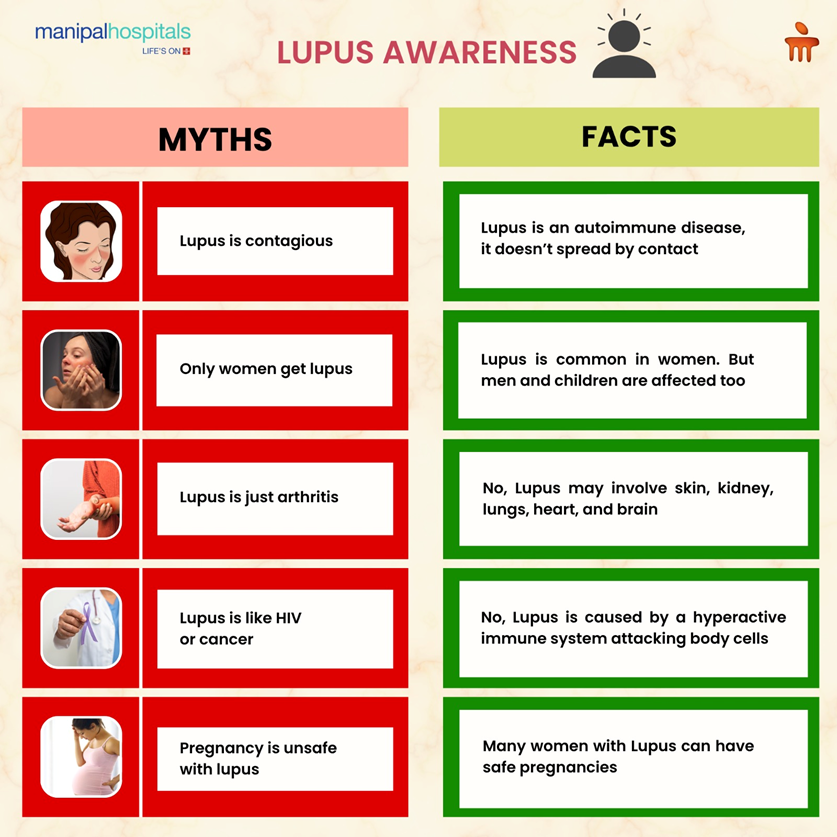
Since there are several types of Lupus with variable clinical presentation, there is a widespread difference in how the general public perceive the condition. This has given rise to several misconceptions about the conditions that have led to a social stigma. Discussed here are a few must-know facts and myths about Lupus:
Fact 1: Lupus Is an Autoimmune Disease
Lupus occurs when the immune system mistakes healthy cells for threats. It then produces antibodies that attack the body’s own tissues, leading to chronic inflammation in various organs. Unlike infections, lupus is not contagious and does not spread from person to person.
-
The immune attack causes inflammation and tissue damage.
-
Lupus flare-ups often occur unpredictably.
Fact 2: Lupus Is Not Rare in India
Estimates place lupus disease prevalence in India at 3.2 to 60 per 100,000. Underdiagnosis means real numbers may be higher. Women outnumber men roughly 9:1. Onset peaks in mid-to-late 20s but can occur by age 12. Childhood lupus shows a 1:3.2 male-to-female ratio. Common presentations include fever, anaemia, nephritis, and rash.
Fact 3: Lupus Affects More Than Just Joints
Lupus causes more than joint pain. It can also attack the skin, kidneys, heart, lungs, and brain.
-
Lupus may manifest with varying skin and mucosal symptoms. While skin may show a malar or butterfly rash typically across the cheeks and nose, discois lesions, macules, papules, scaly patches leading to scarring, or rashes that may worsen on sun exposure (a sign of photosensitivity), mucosal presentations will include ulcers in the mouth or nasal cavity.
-
Lupus nephritis affects half of patients, risking kidney failure without early treatment.
-
Pericarditis or pleuritis causes sharp chest pain and breathlessness during flares.
-
Nervous system involvement can lead to seizures, memory loss, mood swings, or strokes.
Fact 4: Symptoms Vary Widely and Can Be Vague
No two lupus cases are the same. You might feel joint pain, fatigue, or fever one day. The next day, you may notice a skin rash or chest pain. Common lupus symptoms include:
-
Joint pain and stiffness.
-
Butterfly-shaped rash across the cheeks and nose.
-
Extreme fatigue that limits daily activities.
-
Fever without an obvious infection.
Many people with lupus “don’t look sick”. That invisibility makes early detection challenging.
Fact 5: Treatment Exists
The reality about lupus treatment includes both hope and challenges. While no cure exists, modern medications can control symptoms and prevent organ damage in most people.
-
Anti-inflammatory medications form the foundation of most treatment plans.
-
Nonsteroidal anti-inflammatory drugs (NSAIDs) help with joint pain and swelling.
-
Corticosteroids provide powerful anti-inflammatory effects but come with significant lupus side effects when used long-term.
-
Antimalarial drugs like hydroxychloroquine work well for skin rashes and mild joint symptoms.
Myth 1: Lupus Spreads Like a Cold
One of the most persistent myths is, "Is lupus contagious?" The answer is absolutely not. Lupus disease cannot spread from person to person through any form of contact. You can't catch it by touching, kissing, sharing food, or being intimate with someone who has lupus.
This misconception stems from confusion about what causes lupus. Since many illnesses are infectious, people naturally assume lupus might be too. The reality is completely different - lupus is an autoimmune disease, not an infection.
Myth 2: Only Women Get Lupus Disease
While women make up the majority of lupus cases, men and children can develop lupus disease too. This gender disparity leads to the misconception that lupus is exclusively a woman's disease, which can delay diagnosis in male patients.
Men with lupus often experience different symptom patterns than women. They might have more kidney involvement and less joint pain. The hormonal differences between men and women likely contribute to these variations in disease presentation.
Myth 3: Lupus Is Just Another Form of Arthritis
Many people confuse lupus disease with arthritis because joint pain is a common symptom. Arthritis typically affects joints exclusively, causing pain, stiffness, and swelling. Lupus symptoms can include joint problems but extend to virtually every organ system. The skin, kidneys, heart, lungs, and brain can all become targets of the autoimmune attack.
The joint pain in lupus also differs from typical arthritis. Lupus arthritis rarely causes the bone destruction seen in rheumatoid arthritis. Instead, it tends to be migratory, moving from joint to joint, and often improves with anti-inflammatory treatment.
Myth 4: Lupus Equals Cancer or HIV/AIDS
Both HIV/AIDS and cancer involve serious immune or cell dysfunction. Yet lupus differs entirely. HIV/AIDS involves an underactive immune system that can't fight off infections. Lupus creates the opposite problem – an overactive immune system that attacks the body's own tissues. The immune dysfunction in lupus doesn't make you more susceptible to infections in the same way HIV does. Lupus treatment sometimes involves immunosuppressive medications that can increase infection risk slightly.
Myth 5: Pregnancy Is Impossible with Lupus
Many women worry that lupus makes pregnancy impossible or extremely dangerous. While lupus does create additional risks during pregnancy, many women with lupus have healthy babies with proper medical care.
Some women actually experience improvement in lupus symptoms during pregnancy, possibly due to hormonal changes. However, the risk of flares increases after delivery, so careful monitoring continues throughout the postpartum period.
Living Well with Lupus Disease
Managing lupus disease successfully requires a comprehensive approach that goes beyond medications. Lifestyle modifications play crucial roles in controlling symptoms and preventing flares.
-
Sun protection becomes essential for most people with lupus. Ultraviolet light can trigger flares and worsen skin symptoms. Using sunscreen daily, wearing protective clothing, and avoiding peak sun hours help prevent problems.
-
Regular exercise helps maintain joint flexibility and fights the fatigue that affects most lupus patients. Low-impact activities like swimming, walking, or yoga provide benefits without stressing painful joints. Listen to your body and adjust activity levels based on how you feel.
-
Stress management techniques can help reduce flare frequency. Chronic stress might trigger autoimmune activity, making symptoms worse. Meditation, deep breathing exercises, or counselling can provide valuable tools for managing stress.
-
Fatigue is one of the most common and debilitating symptoms of lupus. Establishing good sleep hygiene, treating sleep disorders, and pacing activities throughout the day help combat exhaustion.
Why Lupus Awareness Matters
Raising lupus awareness helps drive early diagnosis and research. It encourages more funding for better treatments. Awareness campaigns also combat stigma. When people understand lupus disease, they support those affected with empathy.
Conclusion
At Manipal Hospital Mysuru, we are committed to supporting patients with expert care and comprehensive management. By spreading awareness, you contribute to a healthier future for everyone affected by this complex autoimmune disease.
Lupus may feel overwhelming, but knowledge is your best ally. Recognise the facts, debunk the myths, and act on reliable information. Early diagnosis and proper management help you live well with lupus. By sharing these insights, you promote better health for everyone touched by this complex disease.
Frequently Asked Questions
Lupus symptoms typically follow a pattern of flares and remissions. During active periods, symptoms worsen or new problems develop. Remission periods bring relief, though some people experience ongoing mild symptoms. This unpredictable pattern is characteristic of lupus disease.
The average time from first symptoms to diagnosis spans several years. Lupus symptoms often mimic other conditions, leading to multiple doctor visits and tests. Blood tests for autoantibodies help confirm the diagnosis, but the process requires patience and persistence.
Lupus disease affects everyone differently. Some people experience mild, stable symptoms for years, while others face more aggressive disease progression. Early diagnosis and proper lupus treatment help prevent organ damage and improve long-term outcomes.
Yes, physical and emotional stress can trigger lupus symptoms to worsen. Stress management techniques, adequate sleep, and lifestyle modifications help reduce flare frequency. Learning to recognise and manage stress becomes an important part of lupus care.
Share this Article


Recent Blogs

Understanding Metallic Taste in the Mouth: A Kidney's Silent Signal?
19 Jun 20268 Min Read
Have you ever experienced a strange, persistent metallic taste in your mouth? While often benign, this peculiar sensation, medically known as dysgeusia, can sometimes be a subtle yet significant indicator of underlying health issues. There are several causes of metallic taste in the mouth, and one of them is kidney dysfunction. In this blog an experienced nephrologist in Mysuru discusses in detail what a metallic taste in the mouth is, the causes, and more importantly, when it might be a sign that your kidneys are trying to tell you something important.
Read NowInsulin Resistance in Women: Early Symptoms You Should Know
17 Jun 20267 Min Read
In the intricate landscape of women's health, certain conditions often go unnoticed until they manifest into more significant concerns. One such silent yet powerful player is insulin resistance. It's a condition where your body's cells don't respond effectively to insulin, leading to elevated blood sugar levels. For many women, understanding the early insulin resistance symptoms in females can be a game-changer, enabling timely intervention and preventing a cascade of health issues. In this blog, an experienced gynaecologist in Mysuru explains in detail the nuances of insulin resistance in women, highlighting the crucial early signs you should be aware of. Recognising these signs of insulin resistance in females is the first step towards taking control of your health journey.
Read NowDecoding Low Blood Pressure: Symptoms, Causes, and When to Seek Expert Help
17 Jun 20269 Min Read
Blood pressure is a vital sign, a fundamental indicator of our cardiovascular health. While high blood pressure often makes the news, low blood pressure, medically known as hypotension, can also be a concern. It's a condition where the force of blood against your artery walls is unusually low. For some, low blood pressure is a normal state, causing no issues. However, for others, it can lead to troubling symptoms and, in severe cases, indicate an underlying health problem requiring immediate medical attention. In this blog, a top interventional cardiologist in Mysore discusses in detail what low BP is, the causes of low BP, identifying the signs of low BP, and when it should be considered a medical concern.
Read NowKidney Pain vs Back Pain: How to Tell the Difference
12 Jun 20266 Min Read
You bend down to pick something up, and a dull ache settles in your lower back. Is it just muscle strain, or could it be something more serious? Many people struggle to tell the difference between back muscle pain and kidney pain, especially at the start. That is because the two can feel surprisingly similar. Back pain is often linked to posture, overuse, or strained muscles, while kidney pain may point to an infection, kidney stones, or another internal issue that needs medical attention. In this blog, a top nephrologist in Mysuru explains the key differences between kidney pain vs back pain, what usually causes each one, and when it is time to see a doctor.
Read NowUnderstanding the Early Warning Signs of Cancer
12 Jun 20265 Min Read
What if noticing a small change today could protect you from something far more serious tomorrow? Many cancers don’t announce themselves loudly at the start. They begin quietly, with subtle symptoms like feeling constantly tired, noticing a painless lump, or a generalised feeling that something just doesn't feel right inside the body. Although they are easy to brush aside, blame on stress, or postpone addressing, they matter. The survival rate for patients with early-stage malignancies (Stage I or II) is two to three times higher than that of patients with later-stage diagnoses. In addition to improving results, early detection frequently makes treatment easier, recovery quicker, and quality of life higher. Through this blog, an experienced cancer surgeon in Mysuru discusses early cancer warning signs of some common cancers seen in India, whose symptoms warrant medical care, and how prompt screening can make all the difference.
Read NowHow to Make Period Headaches Go Away: Tips and Remedies
05 Jun 20267 Min Read
You’re halfway through your day, and suddenly your head starts throbbing, right around your period. Sound familiar? These headaches may feel different from regular ones. At times, they might even feel like migraines. Hormonal fluctuations, particularly changes in oestrogen levels, are commonly responsible for headaches experienced during menstruation. These headaches are common but can be annoying and challenging to manage. You might notice it starts right before your period or on day one; that pattern matters. The good news is that you can lessen the frequency and severity of headaches during periods by learning more about why they happen and using some simple home remedies. In this blog, we bring you clinical insights from a top gynaecology hospital in Mysuru that explain the causes, symptoms, and useful ways to deal with them.
Read NowCOPD vs Asthma: Understanding the Key Differences
05 Jun 20267 Min Read
The ease of breathing is something we rarely notice until something is not right. When breathing becomes a struggle, even the simplest moments can feel overwhelming. Asthma and COPD are common breathing problems affecting millions of people worldwide. Still, many people ask, “Are COPD and asthma the same?” Although both conditions involve airflow limitation and breathing difficulties, they are not identical. It becomes crucial to know about the difference between COPD and asthma in order to diagnose them in a timely manner and treat them properly. In this blog, a leading pulmonologist in Mysuru explains in detail about COPD and asthma including the causes, symptoms, and how to differentiate between the two.
Read NowIs IVF Painful? What to Expect During Fertility Treatment
22 May 20267 Min Read
It can be challenging to start fertility treatment, especially when you keep asking yourself, "Is IVF painful?" This worry is a big source of stress for many couples, even before the process starts. The truth is, IVF (in vitro fertilisation) is usually not very painful. However, it does involve a number of medical steps that could cause mild discomfort at different points. Knowing what really happens during the process can help you get ready in both your body and mind. In this blog, a top reproductive medicine and IVF specialist in Mysuru explains each step of IVF, answers the question "Is IVF a painful process?" and tells you what kind of pain (if any) to expect. Most patients describe IVF as manageable, though some steps can feel moderately uncomfortable depending on individual sensitivity.
Read NowUnderstanding Fatty Liver Disease: A Gastroenterologist’s Guide to Diagnosis and Care
06 May 20267 Min Read
The problem of fatty liver disease is on the rise, more prevalent in city-dwelling individuals living a sedentary lifestyle. Although initially, it might seem innocuous, leaving the condition unchecked could be dangerous in the long run. Fatty liver causes, symptoms, and treatments are all necessary factors that must be considered to maintain the health of your liver. Through this blog a top gastroenterologist in Mysuru discusses fatty liver, where the focus will be on the diagnosis, risks, and treatment of fatty liver disease. It also addresses practical concerns such as how to reduce fatty liver quickly and prevent long-term damage.
Read NowHeart Attacks in Young People: Early Warnings, Risk Factors and How to Stay Safe
06 May 20267 Min Read
In recent years, cardiologists have been seeing a steady rise in heart attacks in young people, especially those under 40 years. This trend is concerning because many of these events happen without warning and lead to tremendous suffering and loss of young people. Understanding the cause of a heart attack at a young age is important for prevention. Factors like a sedentary lifestyle, stress, and co-existing health conditions can increase the risk. This blog an experienced cardiologist in Mysuru, explains the causes of myocardial infarction among youth, early warning signs, and ways to reduce the risk.
Read Now