


How to Treat External Hemorrhoids: Relief and Care Options
Reviewed by: Manipal Hospitals
Posted on
5 Min Read

Not sure what you’re looking for?
Get in touch with our representatives for help!
Contact UsExternal haemorrhoids are a common and often uncomfortable condition that can cause pain, itching, swelling, and bleeding around the anal area. While many people hesitate to discuss these symptoms, effective external haemorrhoid treatment options are available, ranging from simple home remedies to medical procedures.
This blog explains what external haemorrhoids are, how they are treated, and when it is important to see a specialist.
What Are External Haemorrhoids?
Haemorrhoids, also known as piles, are swollen veins in the rectum and anus. External haemorrhoids develop beneath the skin around the anal opening. This area contains many pain-sensitive nerves, which is why external haemorrhoids are often more painful and noticeable than internal haemorrhoids.
Symptoms of External Haemorrhoids
External haemorrhoid symptoms can vary depending on their size and severity. As they develop beneath the skin around the anal opening, they may cause noticeable discomfort.
Common symptoms include:
-
A painful or tender lump near the anus
-
Itching or irritation around the anal area
-
Swelling around the anus
-
Pain or discomfort while sitting or during bowel movements
-
Bright red bleeding after passing stool
In some cases, a blood clot may form inside the haemorrhoid, known as a thrombosed external haemorrhoid. This may appear as a firm, tender lump near the anus and can cause severe pain.
How to Treat External Haemorrhoids?
Treatment depends on the severity of symptoms. Many cases improve with simple conservative care, while persistent or severe cases may require medical procedures.
Home Care and Conservative Management
For mild to moderate cases, management of external haemorrhoids often begins with simple measures at home:
-
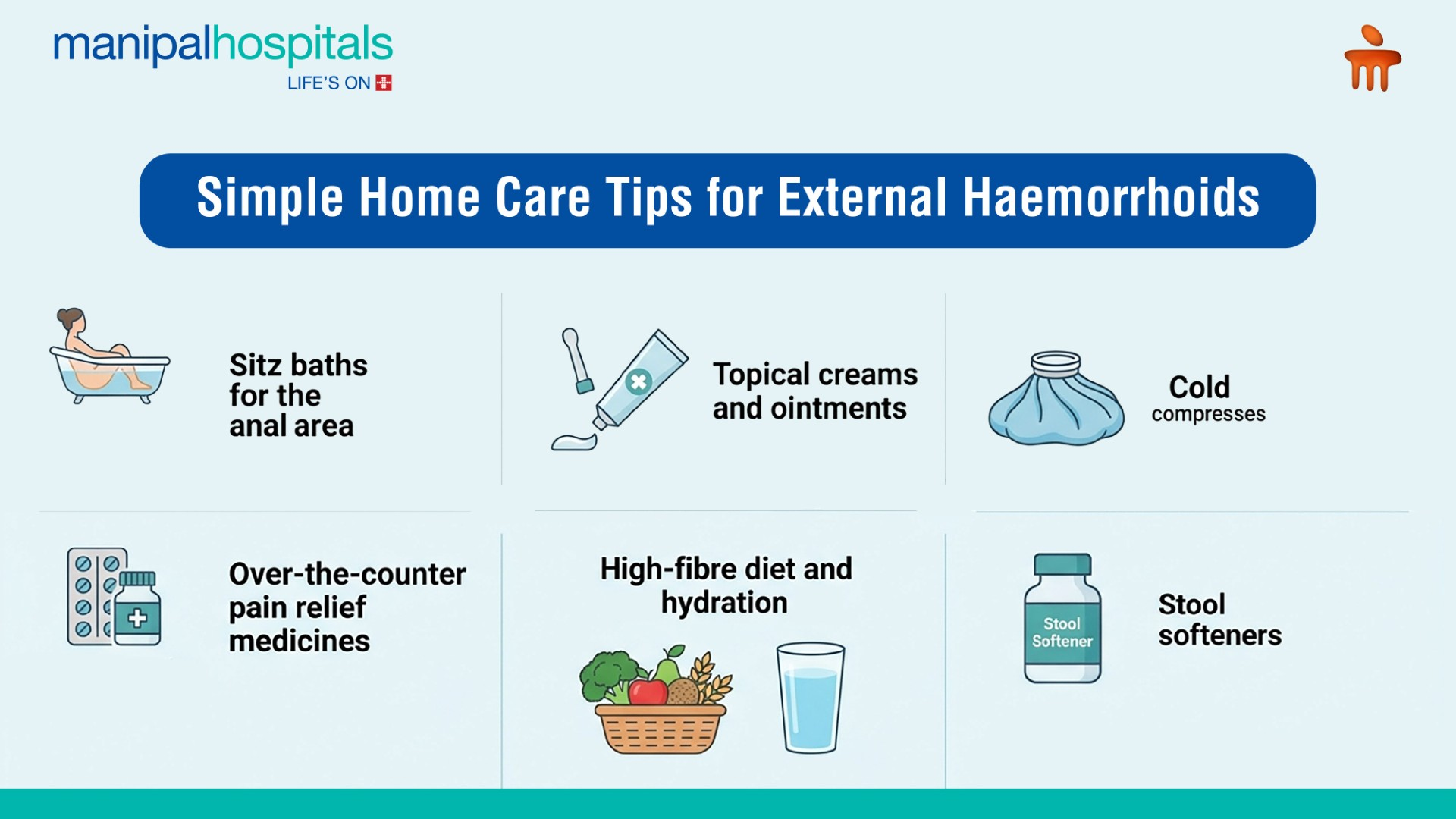
Sitz Baths: Soaking the anal area in warm (not hot) water for 10–15 minutes, two to three times daily, may help relieve swelling, soothe irritation, and improve comfort.
-
Topical Creams and Ointments: Over-the-counter creams containing mild steroids or soothing agents can temporarily reduce itching and discomfort. These should not be used for more than one week without medical guidance, as prolonged use may cause skin thinning.
-
Cold Compresses: Applying a cloth-covered ice pack to the affected area for short intervals may reduce localised swelling and numb discomfort.
-
Over-the-Counter Pain Relief Medicines: Pain relievers may help manage mild to moderate discomfort during flare-ups.
-
High-Fibre Diet and Hydration: Increasing dietary fibre intake to around 25–30 grams daily and drinking adequate water helps soften stools and reduce straining during bowel movements. This is one of the most important lifestyle changes for long-term haemorrhoid prevention.
-
Stool Softeners: If constipation persists, a short course of stool softeners or bulk-forming agents such as ispaghula husk may be recommended.
Medical and Surgical Treatments
If symptoms persist despite home care or if the haemorrhoid becomes severely painful, medical evaluation is recommended. In some cases, minor procedures or surgery may be required to relieve symptoms.
Two main surgical approaches may be considered for external haemorrhoids.
-
Excision or Drainage of a Thrombosed External Haemorrhoid: If a thrombosed external haemorrhoid is diagnosed early, a doctor may make a small incision to drain the clot. This procedure is usually performed under local anaesthesia and may provide faster pain relief when done within 48–72 hours of symptom onset.
-
Haemorrhoidectomy: This procedure involves the surgical removal of the haemorrhoid. It is usually recommended for large, persistent, or recurrent haemorrhoids that do not respond to conservative treatment. The procedure is typically performed under general anaesthesia.
When to See a Doctor
Medical evaluation is recommended if:
-
Symptoms last longer than a week
-
Pain becomes severe
-
Bleeding occurs frequently
-
A painful lump develops suddenly
-
Bleeding continues despite home treatment
Rectal bleeding should always be evaluated by a doctor to rule out other gastrointestinal conditions.
Conclusion
External haemorrhoids can be painful and uncomfortable, but they are manageable with appropriate care. Many people experience relief through simple lifestyle changes and home treatments, while more persistent cases may require medical intervention.
If you have been experiencing symptoms for more than a week or if the discomfort is worsening, consulting a specialist can help ensure proper diagnosis and treatment.
At Manipal Hospitals, the Gastroenterology team provides confidential and comprehensive care for haemorrhoid symptoms, from diagnosis to treatment and recovery.
Frequently Asked Questions
Common symptoms of external haemorrhoids include a painful lump near the anus, itching or burning, swelling, discomfort while sitting, and bright red bleeding after bowel movements. The pain may be sudden and more severe in the case of a thrombosed external haemorrhoid.
Small external haemorrhoids may improve on their own within a few days with rest and simple home care. However, recurrent or thrombosed haemorrhoids may require medical treatment to relieve symptoms and prevent complications.
You can reduce the risk of haemorrhoids by:
-
Eating a fibre-rich diet including fruits, vegetables, legumes, and whole grains
-
Drinking adequate fluids throughout the day
-
Exercising regularly
-
Avoiding prolonged sitting on the toilet
-
Responding promptly to the urge to defecate
Common external haemorrhoid causes for recurrent flare-ups include constipation, low fibre intake, dehydration, prolonged sitting, and obesity. Pregnancy, ageing, and genetic predisposition may also increase the risk.
Warm Sitz baths for 10–15 minutes, cold compresses, and over-the-counter pain relief medicines may help ease discomfort. Topical creams can also temporarily reduce itching and irritation.
Share this Article


Recent Blogs

Test blog - oct 1
01 Oct 20267 Min Read
Understanding Insulin Resistance: A Core Concept Insulin is a vital hormone In the intricate landscape of women's health, certain conditions often go unnoticed until they manifest into more significant concerns. One such silent yet powerful player is insulin resistance. It's a condition where your body's cells don't respond effectively to insulin, leading to elevated blood sugar levels. For many women, understanding the early insulin resistance symptoms in females can be a game-changer, enabling timely intervention and preventing a cascade of health issues. In this blog, an experienced gynaecologist in Mysuru explains in detail the nuances of insulin resistance in women, highlighting the crucial early signs you should be aware of. Recognising these signs of insulin resistance in females is the first step towards taking control of your health journey. it. For women, the prevalence can be even higher, particularly in certain life stages or conditions. Causes of Insulin Resistance in Women While insulin resistance can affect anyone, women face unique physiological factors that can increase their susceptibility: Lifestyle Tips for Long-Term Liver Health The table below lists straightforward lifestyle tips to support lasting liver health and avoid extra damage. ljfslsdjksnfs3333333TestingTestingTestingTestingTestingTestingTestingTestingTestingTestingTestingTestingTestingTestingTestingTestingTestingTestingTestingTestingTestingTestingTestingTestingTestingTestingTestingTestingTestingTestingTestingTestingTestingTestingTestingTestingTestingTestingTestingTestingTesting uiuiiuhghhjTip Description Avoid processed and fried foods Reduces excess fat intake and supports better liver function Include antioxidant-rich foods Fruits and vegetables help protect liver cells from damage Stay physically active Regular exercise improves metabolism and reduces fat accumulation in the liver Monitor weight regularly Helps in maintaining a healthy weight and preventing fat buildup Schedule routine health check-ups Enables early detection and management of liver-related issues These habits support long-term recovery and reduce the risk of future fatty liver problems.
Read NowTypes of Nerve Injury: Causes, Symptoms & Recovery Guide
24 Sept 20260 Min Read
Nerve injuries happen when a nerve is pinched, stretched, cut or damaged. These injuries can cause numbness, tingling, or sharp pain.
Read Nowtesting admin blogs
20 Sept 20262 Min Read
dislocated-hip-symptoms test https://manipaltest.cosmicnet.xyz/referral-program/
Read NowDislocated Hip: Understanding Symptoms, Causes, and Treatment Options
26 Aug 20265 Min Read
A dislocated hip is a severe injury that occurs when the head of the thigh bone (femur) is forced out of the hip socket (acetabulum). This traumatic event can be incredibly painful and immediately incapacitating, requiring urgent medical attention. This blog explores the symptoms, causes, diagnosis, and treatment of hip dislocation with expert insights from specialists at Manipal Hospitals, a top orthopaedic hospital in Vijayawada, offering comprehensive hip dislocation treatment in Vijayawada to help patients achieve the best possible recovery. Understanding the signs, causes, and available treatment options is crucial for anyone who has experienced or knows someone who has experienced this injury. Early intervention is key to preventing long-term complications and ensuring a successful recovery.
Read NowFluttering in Chest: Causes, Symptoms & When to See a Doctor
26 Jun 20266 Min Read
A sudden, strange tapping, flipping or thumping inside your chest can be highly unsettling. This feeling can match the sensation of a brief skipped beat or a sudden twitch. This sensation is commonly known as a fluttering chest. While a fluttering feeling in the chest can be alarming and cause your anxiety to spike, it is actually a very common experience. In many cases, it is harmless. However, in some cases, it points to an underlying medical issue that needs attention.
Read Now10 Warning Signs of an Unhealthy Gut You Must Not Ignore
26 Jun 20266 Min Read
Your gut does much more than digest food. It plays a key role in your energy levels, immune system, mood, and overall well-being. When your gut is healthy, your body works smoothly. But when something is wrong, your body often sends warning signals. Unfortunately, many people ignore these signs or assume they are caused by stress, lack of sleep, or a busy lifestyle. Recognising the early signs of poor gut health can help you make changes before the problem becomes worse. Here are 10 signs of an unhealthy gut that you should never ignore.
Read NowWhat Creatinine Level Indicates Kidney Failure? Doctors Explain
22 Jun 20266 Min Read
Creatinine is a waste product produced by your muscles every day. Healthy kidneys remove it from the blood and pass it out through urine. When the kidneys are not working properly, creatinine can build up in the bloodstream. Seeing a high creatinine level in your blood test report can be working. Many people immediately think it's kidney failure. However, creatinine levels alone do not tell the whole story. Doctors look at several factors, including your age, overall health, and kidney function tests, before determining how well your kidneys are working.
Read NowStomach Cancer Lump: What It Feels Like & When to See a Doctor
22 Jun 20267 Min Read
Finding an unusual bump or swelling on your body can be alarming. If you notice a change in your tummy, it is completely natural to feel a wave of anxiety and wonder what it might mean. One thought that might cross your mind is whether it could be a stomach cancer lump. Feeling concerned is completely valid, but it helps to know that most abdominal changes may have very simple explanations. Understanding what to look for can help quiet some of that worry.
Read NowUnderstanding CT scan and its role in cancer detection.
15 Jun 20268 Min Read
When doctors suspect a serious health condition, imaging tests often play a crucial role in diagnosis. One of the most used imaging tools is a computed tomography (CT) scan. A CT scan provides detailed cross-sectional images of the body`s organs, tissues, and blood vessels. These images can reveal abnormalities that may indicate the presence of cancer. However, understanding what a CT scan can and cannot do is important for accurate diagnosis and treatment planning. However, can a CT scan detect cancer? A CT scan is extremely important in detecting cancer, but it is not always definitive on its own
Read NowTypes of Nerve Injury: Causes, Symptoms & Recovery Guide
15 Jun 20266 Min Read
Nerve injuries happen when a nerve is pinched, stretched, cut or damaged. These injuries can cause numbness, tingling, or sharp pain. Nerves are cords that carry electrical signals from your brain and spinal cord (central nervous system) to the rest of your body and vice versa. These signals allow you to move your muscles and feel sensations like touch and temperature. When a nerve is damaged, these signals are disrupted.
Read Now