


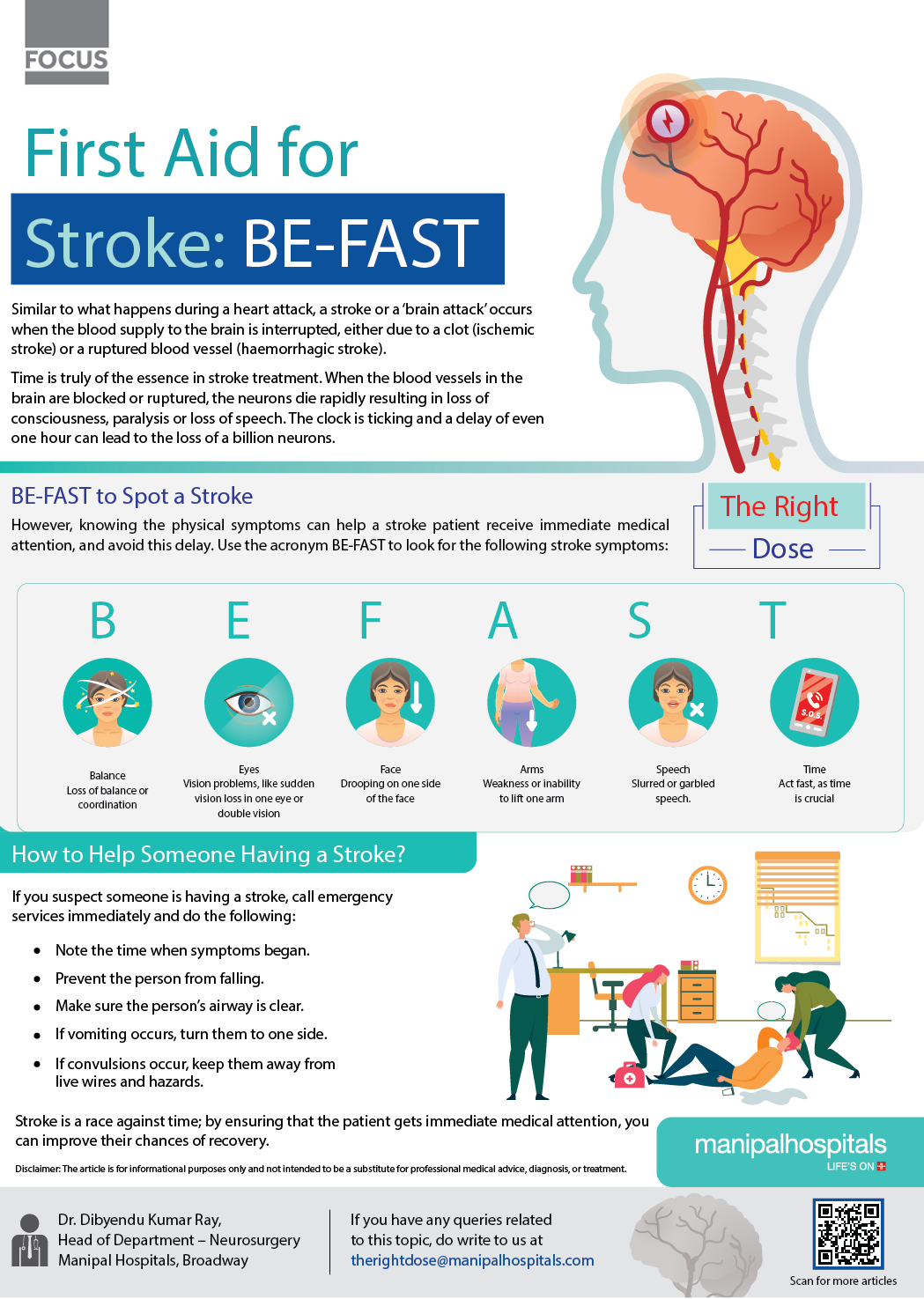
First Aid for Stroke: BE-FAST
Reviewed by: Manipal Hospitals
Posted on
5 Min Read

Not sure what you’re looking for?
Get in touch with our representatives for help!
Contact Us
Share this Article


Similar Blogs

Is Our Young Generation Growing up With Neurosurgical Issues?
1 Min Read
Discover expert insights on is our young generation growing up with neurosurgical issues? from Manipal Hospitals' specialists.
Read NowWhat is Degenerative Disc Disorder?
19 Dec 20245 Min Read
Discover expert insights on what is degenerative disc disorder? from Manipal Hospitals' specialists.
Read NowAwake Brain Surgery Navigating The Mind's Maze With Surgical Advancement
06 Sept 20234 Min Read
Discover expert insights on awake brain surgery navigating the mind's maze with surgical advancement from Manipal Hospitals' specialists.
Read NowA New Face of Neurosurgery - Fostering Hope and Healing for Aging Brains
06 Sept 20234 Min Read
Discover expert insights on a new face of neurosurgery - fostering hope and healing for aging brains from Manipal Hospitals' specialists.
Read NowBrain Cancer What you need to Know
27 Dec 20194 Min Read
Among all types of Cancers, brain cancer is considered the most dangerous; it’s normally difficult to identify at earlier stages and has a high mortality rate. As the primary symptoms of brain cancer can be confused with other diseases, diagnosing brain cancer at the initial stages could be challenging at the same time. What is Brain Cancer? The brain cancer constitutes abnormal cell growth in the local areas of the brain. The tumours that have a local place of origin are called primary brain tumours. The ‘metastatic brain tumour’ is initiated in the secondary part of the brain, and gets transmitted to the Cerebrum. Both types of cancer could be either benign or malignant (spreading). The tumour may consequently get large and press on the adjacent areas of the brain, causing pain or bleeding in critical situations. Symptoms of brain Cancer As with any ailment, brain cancer needs to be identified based on its symptoms. As with any other disease, finding the cancer source at the initial stages is important for treating cancer. Following are the basic symptoms of brain cancer, which may require subjecting yourself to a doctor’s diagnosis. To get the best treatment, visit the top neurosurgery hospital in Bangalore. Headache Headache due to brain tumour is caused because of the enlarging brain tissue pushing into the adjacent nerve cells and displacing the spinal fluid. Pain due to a brain tumour is often severe and gets bad with time. It’s also found to be aggravated in the morning. Nausea and Vomiting A brain tumour can often result in the patient suffering from extreme Nausea and Vomiting. The patient can often suffer from entire blackouts and loss of partial memory. Muscle jerking or twitching If the tumour is near the control centres of the brain, the seizure can often result in body discomfort or Muscle jerking or twitching. It can even often lose partial control of the body, making the body temperature to be extremely volatile. Tests to Determine Brain Cancer The symptoms of brain cancer could negatively affect the ability to function normally. Persistent symptoms require medical attention and the doctor may subject you to the following tests. External Tests to Check Brain Tumor Neurological exam As the brain directly affects your ability to function normally, the doctor can directly check your visual and hearing capabilities to confirm any problems. Any sudden lack of capabilities or weakness also indicates the presence of a new growth among the grey cells. MRI Scan testing The MRI scan machine consists of a large machine with multiple strong magnets that take magnetic pictures of the brain at various angles. Apart from giving an accurate position of the tumour, the working of the MRI scan can also help derive an average size and shape of the tumour. CT Scan Machine The CT scan is a sophisticated X-ray machine that takes a series of pictures of your head. The better the sophistication of the X-ray machine and the distinction of brain parts through injecting foreign ink, the better the CT scan will determine any potential abnormality. Internal Tests to Check Brain Tumor Spinal Tap At the spinal tap, a sample of the cerebral fluid is removed and subjected to examination. Fluid removal is achieved through an accurate needle that accesses the lower part of the spinal column. Biopsy The biopsy involves the removal of an actual brain tissue for examination. This is often taken as the final confirmation measure for brain cancer. Note: This article serves as a basic pointer. Any discomfort that could be associated with brain cancer needs to be immediately notified to the concerned doctor.
Read Now10 Major Risk Factors For Brain Tumours
24 Dec 20194 Min Read
A brain tumour is a growth or a mass of abnormal cells in your brain or close to your brain. It can be cancerous (malignant) or non-cancerous (benign). It is categorized into two types namely, primary and secondary tumours. The primary tumour originates in your brain, and the secondary tumour occurs when the cancer cells from another organ such as the breast or lungs spread to your brain. Causes and risk factors of brain tumour Tumours usually occur due to mutations in the cell's DNA. Consequently, the cells grow, divide rapidly, and produce an abnormal mass called the tumour. However, we do not know the exact cause of these mutations. Doctors have identified certain risk factors for a brain tumour. They include: Your age People of any age can have a chance to develop a brain tumour, but it is more common in children and older adults. The risk also increases with advancing age. Your gender In general, men are more prone to develop cancer compared to women. However, some specific cancers like meningioma are common in women. Your genetic conditions and family history Only about 5 to 10 % of cancers are genetically inherited. If any of your family members have rare syndromes like Li-Fraumeni syndrome or Turcot syndrome, then you may be at a higher risk of getting a brain tumour. Exposure to different forms of radiation Exposure to radiation in the form of CT scans or X-rays of the head may be one of the causes of tumours. If you have undergone radiation therapy in the past for cancers such as leukaemia, then you are at risk of developing a brain tumour. Mainly, if you have had radiotherapy for the head during childhood, then you have a slightly higher chance of developing brain cancer. Exposure to electromagnetic fields such as the energy from cell phones or power lines also increases the risk of a brain tumour. For this reason, the World Health Organization (WHO) promoted the use of hands-free headsets. Exposure to chemicals When you get exposed to certain environmental chemicals from automobile exhaust or chemical plants, you are increasing your risk of developing brain cancer. Smoking and alcohol consumption Smoking and alcohol consumption may not cause a brain tumour. However, they can worsen existing cancers. Therefore, you should try to limit or completely avoid them. Exposure to infections, viruses, and allergens When you have an infection such as HIV or AIDS, then your risk of developing a brain tumour is nearly doubled. Other viruses which can increase your risk are cytomegalovirus and the Ebstein-Barr virus. Head injury and seizures A brain tumour may also be caused by severe head trauma. A history of seizures can also increase the risk of brain tumour. N-nitroso compounds N-nitroso compounds increase the risk of a person developing a brain tumour. It is richly found in cured meats and cosmetics. Therefore, it is better to avoid such foods and cosmetics. Your weight Being overweight is also one of the risk factors for a brain tumour. If you have a greater body mass index (BMI), then you are at a higher risk of developing a brain tumour. Therefore, start doing regular physical activities to maintain a normal weight. A lot of research is still being conducted to find out the possible causes of brain tumours. Although brain tumour is not always linked with these causes, they may increase the risk of developing a tumour. Be alert and cautious about the causes and risk factors of a brain tumour. If you are suffering from a headache for a long period, then do not neglect to talk to your doctor. Early detection and treatment can increase your life span.
Read NowIs Headache A Symptom Of Brain Tumor
24 Dec 20194 Min Read
Brain tumours are developed inside the brain or anywhere in the central nervous system or inside the skull. We name all of them ‘brain tumours’ but, actually only around half of them have malignant (cancerous) brain tumours. The rest of the tumours are non-cancerous, or just the tumours, which have not been diagnosed as non-cancerous or cancerous. It is usually because of the tumours in such an area of your brain that it is too difficult to take them out as samples to make a proper diagnosis. There are various kinds of primary brain tumours. Everyone gets its title from the kind of cells involved. Types of Brain Tumours Gliomas These particular tumours arise in the spinal cord or brain and contain glioblastomas, astrocytomas, oligodendrogliomas, ependymoma, and oligoastrocytomas. Meningiomas A meningioma is a tumour that develops from the brain's surrounding membrane and spinal cord. Most meningiomas are regarded as noncancerous. Acoustic neuromas (schwannomas) These are non-threatening tumours that grow on nerves that control equilibrium and transfer hearing from the inner ear to the brain. Pituitary adenomas These are typically non-malignant tumours that grow in the pituitary gland at the ground of the brain. These tumours may harm pituitary hormones. As a result, it affects the whole body. Medulloblastomas These tumours are the most common cancerous brain tumours in children. A medulloblastoma rises in the lower back of the brain and inclines to an extent over the vertebral fluid. These tumours are not common in adults, but they may occur. Craniopharyngiomas These rare and noncancerous tumours develop near the brain’s pituitary gland, which secretes hormones that switch many corporeal activities. As the craniopharyngioma grows slowly, it can harm the pituitary gland and other components near the brain. The Cause of Brain Tumor Primary brain tumours develop in the brain or tissues near it, like in the brain-casing membranes (meninges), pituitary gland, pineal gland, or cranial nerves. Primary brain tumours arise when normal cells gain errors (mutations) in DNA. These changes permit cells to develop and separate at good rates. They remain living when vigorous cells die. The effect is a collection of uncharacteristic cells, which build a tumor. Primary brain tumours are less common than secondary brain tumours, in which cancer develops and spreads to the brain. Doctors do not know the correct reasons for primary brain tumours. There are also several risk factors in this situation. Genetic diseases put you at risk for a brain tumour. This includes neurofibromatosis and Turcot syndrome. If you have brain cancer, then you have to go through radiation therapy treatment. This treatment also increases the probability of brain tumours. You don’t have any proof that cell phone is responsible for brain cancer. National Cancer Institute reports that, though cell phone usage has increased considerably from 1992 to 2008, the frequency of glioma has not increased much in this particular time. Studies always exposed new paths of observation. Some European researchers have considered to some extent a greater risk of brain tumors along with continuous cell phone usage.
Read NowAll You Need to Know About Brain Tumor
23 Dec 20194 Min Read
What is a Brain Tumor? A brain tumor is the formation of a mass or outgrowth of cells of the brain. These tumors are enclosed within the skull which increases the intracranial pressure and causes damage to the skull and brain cells. Brain tumors may be classified into malignant (cancerous) and benign (non-cancerous) tumors. The type of tumor determines the severity, scope of treatment, and cure of the tumor. Depending on the origin of the tumor, it can be classified as a primary or secondary tumor. Primary tumors originate from the brain tissues, while secondary tumors originate from other parts of the body and affect the brain cells. These secondary tumors are also known as metastatic brain tumors. The severity of brain tumors depends on the size and location of the tumors. However, the rate of multiplication of cancer cells increases the risk of the condition. How many different types of Brain tumors are there? The common types of brain tumors include: Choroid plexus carcinoma: It is a WHO grade-III tumor that arises from the choroid plexus of the brain. The prognosis of this tumor is very poor compared to grade-I and II choroid plexus papilloma. These tumors are predominantly found in children below 5 years of age. Craniopharyngioma: It is a non-cancerous tumor that nests near the pituitary stalk. Adamantinomatous craniopharyngioma, a type of craniopharyngioma is majorly found in children, while papillary craniopharyngioma, a solid tumor is predominant in the adult population. Pituitary tumors: These tumors arise from the pituitary gland. Pituitary adenomas, a subtype represent approximately 10% of brain tumors. However, pituitary carcinoma is a rare type of brain tumor. Pineoblastoma: It is a WHO Grade-IV tumor that is a highly aggressive type of tumor. These tumors are present in the pineal gland and resemble retinoblastoma and medulloblastoma. These are also known as small round blue cell tumors. Meningioma: These tumors arise on the surface of the brain and spinal lying beneath the skull. These are non-cancerous tumors and may be fatal in rare cases. What are the Symptoms of a Brain Tumor? Brain tumors may produce mild to severe symptoms that affect the functions of the brain and other parts of the body. These symptoms vary depending on the size, shape, and location of the tumors. The common symptoms of brain tumors include: Newer forms of headache. Increased severity of headaches. Nausea and vomiting Visual defects or visual impairment. Loss of sensation in the hands and feet. Reduced movement of the hands and feet. Difficulty in maintaining balance and coordination. Speech impairment Confusion Changes in the behavioral pattern. Hearing impairment Seizures What are the Causes of Brain Tumor? Primary brain tumors originate from the brain or the tissues present in the brain, such as the meninges, pituitary gland, or cranial nerves. The secondary tumors may originate from other parts of the body and spread (metastasis) to the brain. These tumors usually occur in people with a history of tumors. The causes of secondary tumors may include oral, breast, lung, colon, and kidney cancer. What are the risk factors for Brain Tumors? The risk of brain tumors increases with the following factors: Age: Brain tumors affect people of all age groups. Older people are at an increased risk of developing brain tumors. However, certain types of cancers such as choroid plexus carcinoma and craniopharyngioma are observed in children. Radiation exposure: Frequent exposure to radiation such as diagnostic radiation and ionizing radiation increase the risk of developing brain tumors. Inherited gene: Individuals with a family history of a brain tumor or a genetically inherited gene are at an increased risk of developing brain tumors. How does a doctor diagnose a Brain Tumor? The diagnosis of brain tumors includes: Neurological examination: Monitoring the movement, coordination, vision, speech, and muscle reflexes provide scope for detection of the affected part of the brain. Brain scan: Image scans such as magnetic resonance imaging (MRI) scan and computed tomography (CT) scan helps in the detection of tumors. In certain cases, radioactive dye is injected into the veins that impart color to the brain cells enabling the visibility of the tumors. Biopsy test: A thin needle is inserted into the skull for the collection of the tumor cell. This test helps in differentiating cancerous tumors from non-cancerous tumors. Blood test: Complete blood cell count (CBC) and other laboratory parameters are performed to determine any underlying cause of brain tumors. What are the Treatments for Brain Tumor? Depending on the type of brain tumor and severity of the condition, brain tumors can be treated either with chemotherapy, radiation therapy, or brain tumor surgery which leads to a better brain tumor survival rate. Chemotherapy: These agents are used to prevent the growth and spread of tumor cells that are administered through the intravenous or oral route of drug administration. The duration and the dose of the drug depend on the type of tumor cells. Radiation therapy: High-intensity radiations are used to kill tumor cells. These radiations are used in combination with chemotherapy for better treatment and cure of brain tumors. Surgery: The size and location of the tumor determine the complexity of the surgery. The tumors that are accessible can be removed easily, while only a part of the tumor is removed when tumors lie in deeper layers of the brain. Thus, reducing the risk of brain damage. Coping and Support Early detection and diagnosis of the symptoms provide scope for treatment and cure of brain tumors. Managing the symptoms and complications helps in minimizing the risk of damage to the brain and other body parts. Seeking additional speech and physical therapies helps in regaining speech and motor movements respectively. This enables better rehabilitation and improves speech, coordination, and balance. Regular follow-up sessions and the use of medications help in the faster recovery of the patient.
Read NowRecent Blogs
Test blog - oct 1
01 Oct 20267 Min Read
Understanding Insulin Resistance: A Core Concept Insulin is a vital hormone In the intricate landscape of women's health, certain conditions often go unnoticed until they manifest into more significant concerns. One such silent yet powerful player is insulin resistance. It's a condition where your body's cells don't respond effectively to insulin, leading to elevated blood sugar levels. For many women, understanding the early insulin resistance symptoms in females can be a game-changer, enabling timely intervention and preventing a cascade of health issues. In this blog, an experienced gynaecologist in Mysuru explains in detail the nuances of insulin resistance in women, highlighting the crucial early signs you should be aware of. Recognising these signs of insulin resistance in females is the first step towards taking control of your health journey. it. For women, the prevalence can be even higher, particularly in certain life stages or conditions. Causes of Insulin Resistance in Women While insulin resistance can affect anyone, women face unique physiological factors that can increase their susceptibility: Lifestyle Tips for Long-Term Liver Health The table below lists straightforward lifestyle tips to support lasting liver health and avoid extra damage. ljfslsdjksnfs3333333TestingTestingTestingTestingTestingTestingTestingTestingTestingTestingTestingTestingTestingTestingTestingTestingTestingTestingTestingTestingTestingTestingTestingTestingTestingTestingTestingTestingTestingTestingTestingTestingTestingTestingTestingTestingTestingTestingTestingTestingTesting uiuiiuhghhjTip Description Avoid processed and fried foods Reduces excess fat intake and supports better liver function Include antioxidant-rich foods Fruits and vegetables help protect liver cells from damage Stay physically active Regular exercise improves metabolism and reduces fat accumulation in the liver Monitor weight regularly Helps in maintaining a healthy weight and preventing fat buildup Schedule routine health check-ups Enables early detection and management of liver-related issues These habits support long-term recovery and reduce the risk of future fatty liver problems.
Read NowTypes of Nerve Injury: Causes, Symptoms & Recovery Guide
24 Sept 20260 Min Read
Nerve injuries happen when a nerve is pinched, stretched, cut or damaged. These injuries can cause numbness, tingling, or sharp pain.
Read Nowtesting admin blogs
20 Sept 20262 Min Read
dislocated-hip-symptoms test https://manipaltest.cosmicnet.xyz/referral-program/
Read NowDislocated Hip: Understanding Symptoms, Causes, and Treatment Options
26 Aug 20265 Min Read
A dislocated hip is a severe injury that occurs when the head of the thigh bone (femur) is forced out of the hip socket (acetabulum). This traumatic event can be incredibly painful and immediately incapacitating, requiring urgent medical attention. This blog explores the symptoms, causes, diagnosis, and treatment of hip dislocation with expert insights from specialists at Manipal Hospitals, a top orthopaedic hospital in Vijayawada, offering comprehensive hip dislocation treatment in Vijayawada to help patients achieve the best possible recovery. Understanding the signs, causes, and available treatment options is crucial for anyone who has experienced or knows someone who has experienced this injury. Early intervention is key to preventing long-term complications and ensuring a successful recovery.
Read NowFluttering in Chest: Causes, Symptoms & When to See a Doctor
26 Jun 20266 Min Read
A sudden, strange tapping, flipping or thumping inside your chest can be highly unsettling. This feeling can match the sensation of a brief skipped beat or a sudden twitch. This sensation is commonly known as a fluttering chest. While a fluttering feeling in the chest can be alarming and cause your anxiety to spike, it is actually a very common experience. In many cases, it is harmless. However, in some cases, it points to an underlying medical issue that needs attention.
Read Now10 Warning Signs of an Unhealthy Gut You Must Not Ignore
26 Jun 20266 Min Read
Your gut does much more than digest food. It plays a key role in your energy levels, immune system, mood, and overall well-being. When your gut is healthy, your body works smoothly. But when something is wrong, your body often sends warning signals. Unfortunately, many people ignore these signs or assume they are caused by stress, lack of sleep, or a busy lifestyle. Recognising the early signs of poor gut health can help you make changes before the problem becomes worse. Here are 10 signs of an unhealthy gut that you should never ignore.
Read NowWhat Creatinine Level Indicates Kidney Failure? Doctors Explain
22 Jun 20266 Min Read
Creatinine is a waste product produced by your muscles every day. Healthy kidneys remove it from the blood and pass it out through urine. When the kidneys are not working properly, creatinine can build up in the bloodstream. Seeing a high creatinine level in your blood test report can be working. Many people immediately think it's kidney failure. However, creatinine levels alone do not tell the whole story. Doctors look at several factors, including your age, overall health, and kidney function tests, before determining how well your kidneys are working.
Read NowStomach Cancer Lump: What It Feels Like & When to See a Doctor
22 Jun 20267 Min Read
Finding an unusual bump or swelling on your body can be alarming. If you notice a change in your tummy, it is completely natural to feel a wave of anxiety and wonder what it might mean. One thought that might cross your mind is whether it could be a stomach cancer lump. Feeling concerned is completely valid, but it helps to know that most abdominal changes may have very simple explanations. Understanding what to look for can help quiet some of that worry.
Read NowUnderstanding CT scan and its role in cancer detection.
15 Jun 20268 Min Read
When doctors suspect a serious health condition, imaging tests often play a crucial role in diagnosis. One of the most used imaging tools is a computed tomography (CT) scan. A CT scan provides detailed cross-sectional images of the body`s organs, tissues, and blood vessels. These images can reveal abnormalities that may indicate the presence of cancer. However, understanding what a CT scan can and cannot do is important for accurate diagnosis and treatment planning. However, can a CT scan detect cancer? A CT scan is extremely important in detecting cancer, but it is not always definitive on its own
Read NowTypes of Nerve Injury: Causes, Symptoms & Recovery Guide
15 Jun 20266 Min Read
Nerve injuries happen when a nerve is pinched, stretched, cut or damaged. These injuries can cause numbness, tingling, or sharp pain. Nerves are cords that carry electrical signals from your brain and spinal cord (central nervous system) to the rest of your body and vice versa. These signals allow you to move your muscles and feel sensations like touch and temperature. When a nerve is damaged, these signals are disrupted.
Read Now