


8 Easy Eye Exercises To Improve Vision
Reviewed by: Manipal Hospitals
Posted on
4 Min Read

Not sure what you’re looking for?
Get in touch with our representatives for help!
Contact UsGood vision is essential, yet many of us neglect our eye health until problems arise. Fortunately, there are simple exercises that can help improve and maintain vision. In this blog, we'll explore 8 easy eye exercises that can be incorporated into your daily routine to promote better vision. Whether you're struggling with nearsightedness, farsightedness, or just want to keep your eyes healthy, these exercises can make a significant difference.
8 Eye Exercises to Improve Vision
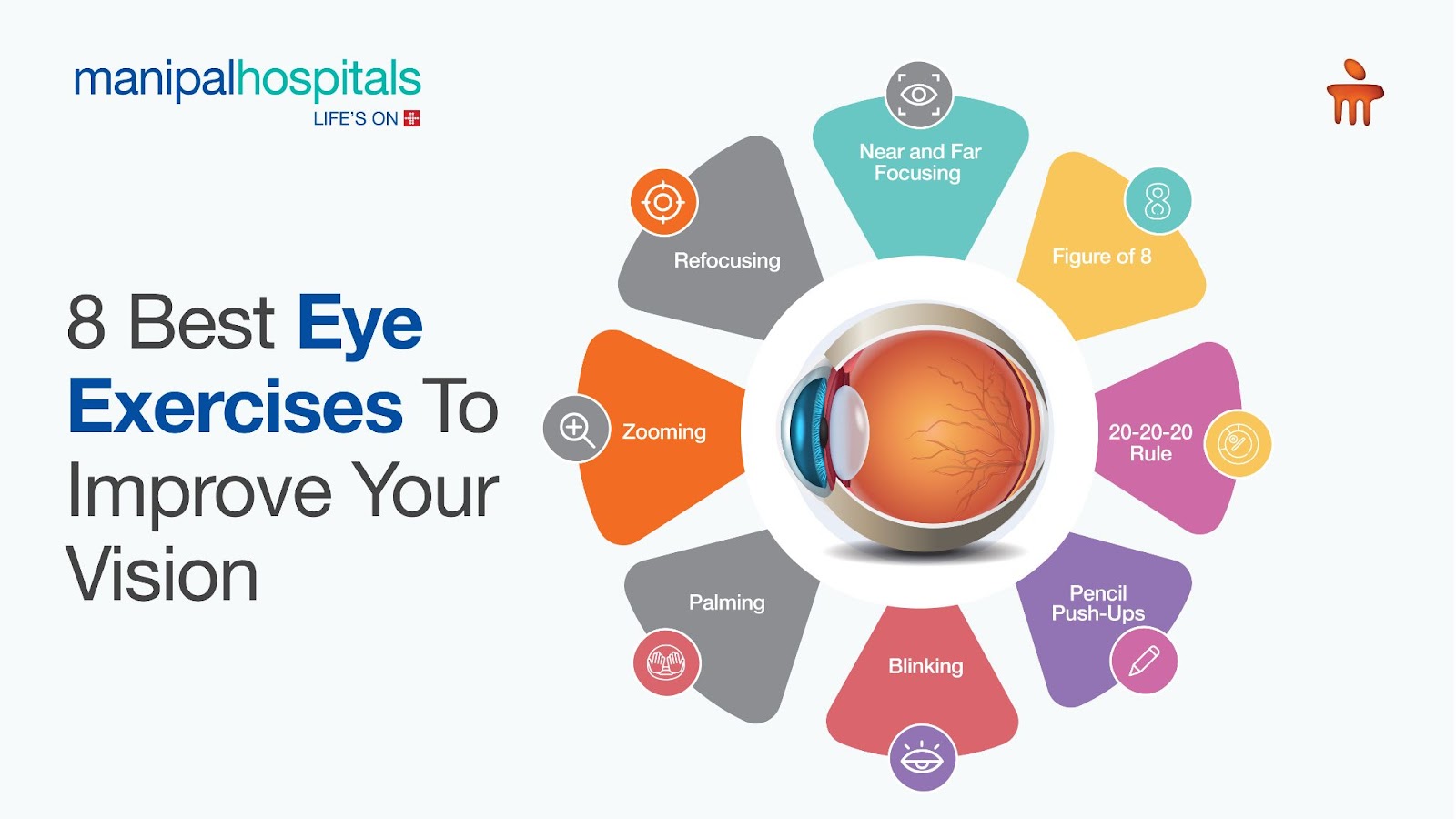
1. Palming Technique
One of the simplest and most effective eye strengthening exercises is the palming technique. To perform this exercise, sit comfortably with your elbows on a table. Close your eyes and cover them with the palms of your hands, ensuring no light enters. Relax and breathe deeply for 1-2 minutes while visualising a peaceful scene. Palming helps relax the eye muscles, reduce strain, and improve circulation to the eyes.
2. Eye Rolling
Eye rolling is a straightforward exercise that helps improve eye flexibility and strength. Sit or stand comfortably and slowly look up towards the ceiling. Then, without moving your head, slowly roll your eyes in a clockwise direction for a few seconds, and then counter-clockwise. Repeat this motion several times, ensuring to blink between each rotation. Eye rolling helps prevent eye stiffness and enhances eye muscle control.
3. Focus Shifting
Focus shifting is beneficial for people who spend a lot of time looking at screens or performing close-up work. Hold a pen or pencil at arm's length, focusing on its tip. Slowly bring the pen closer to your nose while maintaining focus. Then, slowly move it back to arm's length. Repeat this process 10-15 times. Focus shifting exercises the muscles responsible for accommodation, which is the ability of the eyes to adjust focus between near and distant objects.
4. Near and Far Focusing
This exercise helps improve the flexibility of the eye muscles and enhances depth perception. Find a distant object to focus on, such as a tree or building, and another nearby object, like your finger or a pen. Alternate your focus between the distant object and the near object, shifting your gaze back and forth several times. This eye exercises to improve vision can be particularly beneficial for those experiencing age-related vision changes.
5. Blinking Exercise
Blinking is essential for keeping the eyes moist and preventing dryness, especially for individuals who spend prolonged periods staring at screens. Set a timer for every 20 minutes and blink rapidly for 10-15 seconds. This exercise helps lubricate the eyes, reduce eye strain, and refresh vision. Additionally, blinking helps distribute tear film evenly, promoting clearer vision.
6. Figure Eight Eye Exercise
The figure eight eye exercise is an excellent way to improve eye coordination and flexibility. Visualise an imaginary figure eight or infinity symbol horizontally in front of you. Slowly trace the figure eight with your eyes, focusing on smooth and controlled movements. Repeat this exercise for several repetitions, alternating between clockwise and counterclockwise directions. The figure eight eye exercise helps strengthen eye muscles and improve eye tracking ability.
7. The 20-20-20 Rule
While not a traditional eye exercise, following the 20-20-20 rule can significantly benefit eye health, especially for those who spend long hours in front of digital screens. Every 20 minutes, take a 20-second break and look at something 20 feet away. This practice helps reduce eye strain and fatigue by giving the eyes a chance to rest and refocus.
8. Zooming
Zooming eye exercises are a series of movements designed to improve visual focus and flexibility. These exercises are particularly beneficial for individuals who spend long hours in front of screens or those experiencing eye strain or fatigue. The goal of zooming exercises, or increase eyesight exercises, is to strengthen the eye muscles, enhance coordination between the eyes, and improve the ability to switch focus quickly between near and far objects.
If you experience ongoing eye strain or discomfort, it's a good idea to connect with a doctor online instantly. They can provide advice on the best exercises or treatments to improve your eye health and comfort
Incorporating these 8 simple eye exercises into your daily routine can go a long way in improving and maintaining your vision health. Remember to practice them consistently and consult with an eye care professional if you experience any persistent vision problems. By taking proactive steps to care for your eyes, you can enjoy clear and healthy vision for years to come.
Frequently Asked Questions
It's recommended to perform these eye exercises daily for optimal results. Incorporating them into your daily routine, such as during breaks from screen time or before bed, can help improve eye health and prevent vision problems.
While these exercises may not eliminate the need for corrective eyewear, they can help improve overall eye health and potentially reduce the progression of certain vision problems. Consistency is key, and you may find that your prescription needs adjustment over time as your eye muscles become stronger and more flexible.
These exercises are suitable for individuals of all ages, from children to seniors. However, it's essential to perform them with caution and consult with an eye care professional if you have any underlying eye conditions or concerns.
While these exercises may not directly cure conditions like astigmatism or lazy eye, they can help improve overall eye function and may complement other treatments prescribed by your eye doctor. It's essential to discuss your specific condition and treatment plan with a qualified optometrist or ophthalmologist.
The timeframe for seeing results can vary depending on individual factors such as age, current eye health, and consistency of practice. Some people may notice improvements in a matter of weeks, while others may take longer. Patience and consistency are key, so continue practicing these exercises regularly for the best outcomes. If you experience any unusual symptoms or discomfort, consult with an eye care professional.
Share this Article


Similar Blogs

Protect Your Vision: Tips For Preventing Eye Injuries In The Workplace
18 Mar 20243 Min Read
Our eyes are precious, yet often taken for granted until an injury occurs. Eye injuries in the workplace are not uncommon, but they are largely preventable with the right precautions and awareness. Whether you work in construction, manufacturing, or an office environment, it's essential to prioritise eye safety. In this blog, we'll discuss practical tips for preventing eye injuries at work and answer some frequently asked questions to ensure you keep your vision safe and sound.
Read NowSee Better Naturally: Top 10 Tips For Healthy Eyes
25 Jan 20243 Min Read
Having good eyesight is very important for living a healthy and fruitful life. It enables us to perceive the wonders of the world that is around us, acquire knowledge and skills, and establish meaningful connections with our fellow beings. However, there are people with various vision impairments, such as nearsightedness, farsightedness, and astigmatism. This makes it difficult to view things distinctly, thus resulting in weariness, migraines, and even hazardous mishaps. If you want to enhance your eyesight using natural methods, there are several ways to do so. Here are 10 tips on how to improve your eyesight. 1. Eat a Healthy Diet Your diet plays a major role in your overall health, including your vision. Eating plenty of fruits, vegetables, and whole grains will provide your body with the nutrients it needs to support healthy eyes. Specific foods that are good for your eyes include: Carrots Green leafy vegetables Fish Eggs 2. Get Enough Sleep Sleep is essential for overall health, and it's also important for eye health. When you don't get enough sleep, your eyes can become tired and strained. Aim for 7-8 hours of sleep each night. 3. Wear Sunglasses Sunglasses can help protect your eyes from harmful ultraviolet (UV) rays from the sun. UV rays can damage the retina, which is the light-sensitive tissue at the back of the eye. Sunglasses should block 99% of UVA and UVB rays. 4. Quit Smoking Smoking is bad for your overall health, and it's also bad for your eyes. Smoking can increase your risk of developing age-related macular degeneration, cataracts, and glaucoma. If you smoke, quitting is the best thing you can do for your eye health. 5. Exercise Regularly Regular exercise is good for your overall health, and it's also good for your eyes. Exercise can help improve blood circulation to the eyes, which can help prevent vision problems. Aim for at least 30 minutes of moderate-intensity exercise most days of the week. 6. Get Regular Eye Exams Regular eye exams are important for detecting and treating vision problems early. Your eye doctor can check your vision, eye pressure, and retina for signs of damage. 7. Practise Good Eye Hygiene Good eye hygiene can help prevent the spread of infections. Wash your hands thoroughly with soap and water before touching your eyes. Avoid rubbing your eyes, as this can irritate them. Take better care of your precious peepers. Watch and learn how to keep your eyes safe from conjunctivitis in the video: 8. Take Breaks from Screens Staring at screens for long periods can strain your eyes. Take breaks every 20-30 minutes to look at something at least 20 feet away. 9. Try Eye Exercises Increasing eyesight exercise can help improve your eye coordination and focus. There are several different eye exercises that you can try. Here are a few examples: Palming: Close your eyes and place your palms over them. Rest your palms on your forehead for 2-3 minutes. Panning: Look to the left, then to the right, then up, then down. Repeat 10 times. Zooming: Focus on a small object in the distance, then slowly bring it closer to your face. Repeat 10 times. 10. Use Natural Remedies for Eye Strain Certain natural remedies can offer relief from eye strain caused by digital screens and other factors. Consider: Eye washes: Prepare a cooled chamomile tea infusion and use it as an eye wash to soothe tired eyes. Gently massage your temples: Applying gentle pressure to your temples can improve blood flow and reduce eye strain. Practice yoga for the eyes: Specific yoga poses can help relax the eye muscles and improve flexibility.
Read NowEye Flu (Conjunctivitis): Symptoms, Prevention And Home Care
03 Aug 20235 Min Read
Conjunctivitis, commonly known as eye flu or pink eye, is an inflammation of the conjunctiva - the transparent membrane that lines the eyelid and covers the white part of the eye. Generally, Eye Flu is diagnosed in monsoon season. It can be caused by viral or bacterial infections, allergies, or other irritants. In the latest medical reports, it is observed that more than 100 people are diagnosed daily with Eye Flu. Hence, it is advisable to follow the below-mentioned points to keep your eyes healthy. Dr. Vanuli Bajpai, Consultant - Ophthalmology, HCMCT Manipal Hospitals, Dwarka, says, "For the last two weeks we've been seeing a spike in acute conjunctivitis that is most likely viral." Eye Flu Symptoms The most common symptoms of conjunctivitis are redness and inflammation of the eye. Other common symptoms include: Itching or burning sensation Watering of the eyes Sensitivity to light Discharge from the eye, which can cause crusting and sticking of eyelids together. If you experience these symptoms, it is important to seek medical attention. Consult the best eye doctor at Manipal Hospitals for effective treatment. Types of Conjunctivitis There are three main types of conjunctivitis - viral, bacterial, and allergic: Viral Conjunctivitis This type of conjunctivitis is caused by a viral infection, such as the common cold or flu. It can be highly contagious, and symptoms can last up to two weeks. Bacterial Conjunctivitis This type is caused by a bacterial infection. Symptoms can include a yellowish-green discharge from the eye, and treatment usually involves antibiotics. Allergic Conjunctivitis Allergic conjunctivitis is caused by allergens such as pollen or pet dander. It can occur seasonally or year-round and is not contagious. Eye Flu Prevention The following steps can help prevent the spread of conjunctivitis: Wash hands frequently, especially before touching the eyes Avoid touching the eyes with your hands Avoid sharing pillows, towels, and other personal items Practice good hygiene, especially during cold and flu season Use protective eyewear when appropriate, such as when swimming or doing other activities with potential eye exposure risk. Eye Flu Treatment While most cases of conjunctivitis require medical treatment, several eye flu treatments at home can provide relief from symptoms: Warm Compress: A warm compress can help relieve inflammation and itching. Apply a warm compress for 5-10 minutes several times a day. Cold Compress: In some cases, a cold compress can relieve symptoms of conjunctivitis. Use a clean cloth or ice pack wrapped in a towel and apply it to the affected eye for 5-10 minutes. Artificial Tears: Over-the-counter artificial tears can help provide relief from dryness and irritation of the eyes. Cleanse The Eye Area: Use a clean, damp cloth to gently clean the eye area to remove any discharge from the eye. This can also help reduce the risk of spreading the infection. Conjunctivitis, or eye flu, is an inflammation of the eye that can be caused by viruses, bacteria, allergies, or irritants. Pink eye symptoms include redness, itching, and discharge from the eye. While some home care remedies can provide relief, it is important to seek medical attention at the best eye hospital in Bangalore if symptoms persist or worsen. Practising good hygiene and eye protection can help prevent the spread of conjunctivitis. FAQs 1. What are the types of Pink eyes? Pink eye, also known as conjunctivitis, can have different types based on the cause: Viral Conjunctivitis: Caused by a virus, it's highly contagious and may cause redness, watery discharge, and itching. Bacterial Conjunctivitis: Caused by bacteria, it can lead to redness, thick yellow or green discharge, and crusting. Allergic Conjunctivitis: Triggered by allergens like pollen or pet dander, it causes red, itchy, and watery eyes. Chemical Conjunctivitis: Caused by irritants like chemicals or smoke, leading to redness, tearing, and discomfort. If you suspect pink eye, it's essential to consult an eye doctor for a proper diagnosis and treatment. 2. How can I treat viral conjunctivitis? Here are some general guidelines: Hygiene: Wash your hands frequently and avoid touching your eyes to prevent spreading the virus. Warm Compress: Applying a warm compress to your eyes can help alleviate discomfort and reduce swelling. Artificial Tears: Over-the-counter lubricating eye drops (artificial tears) can help soothe the irritation and keep your eyes moisturised. Avoid Contacts: If you wear contact lenses, avoid using them until your symptoms have cleared up. Avoid Eye Makeup: Refrain from using eye makeup during the infection to prevent further irritation. Rest: Get plenty of rest to help your body fight off the virus. No Rubbing: Avoid rubbing your eyes, as it can worsen the condition and spread the virus to your hands and other surfaces. Consult a Doctor: If your symptoms persist or worsen, seek medical advice for proper evaluation and potential antiviral medications. Also, read the blog on How to prevent your eyes from pollution to protect your eyes from harmful dust particles. 3. How long does viral conjunctivitis last? The duration of viral conjunctivitis, also known as pink eye, can vary depending on several factors. In most cases, viral conjunctivitis can last for about 1 to 2 weeks. However, the timeline may be influenced by the specific virus causing the infection, individual health factors, and how well the affected person follows hygiene measures to prevent its spread. During this time, it's essential to practice good hygiene, avoid touching the eyes, and frequently wash hands to prevent the virus from spreading to others. If the symptoms persist beyond two weeks or worsen, it's advisable to consult with an eye doctor or a healthcare professional for further evaluation and appropriate treatment. 4. What precautions should I take to prevent the spread of pink eye? For eye flu treatment at home or to prevent spreading pink eye (viral conjunctivitis) to others and to avoid re-infection, consider taking the following precautions: Use Separate Towels: Use separate towels for your face and eyes, and avoid sharing them with others. Change Pillowcases: Change pillowcases regularly during the infection and wash them in hot water to prevent reinfection. Isolate Personal Items: Avoid sharing personal items such as towels, eye drops, or eye makeup with others. Keep Hands Away from Others' Eyes: Be mindful of not touching or rubbing other people's eyes, as you could potentially spread the virus to them. Stay Home: If possible, stay home from work, school, or public places until the symptoms improve to prevent spreading the infection to others. Proper Disposal of Tissues: If you use tissues to wipe your eyes or nose, dispose of them properly in a trash can and wash your hands immediately afterwards. 5. Can washing with saline water help? According to Dr. Vanuli Bajpai, "Saline or salt water is of no help, and rinsing your eyes with it can even irritate them further." He recommends making a homemade compress by dipping some clean cotton in clean warm water to help soothe irritation and to clean the discharge.
Read NowHow To Avoid Eye Infections Against Pollution?
20 Jun 20237 Min Read
Air pollution is an unavoidable hazard that distorts a good vision of an individual. It is one of the ten dangers that distort one's vision and respiratory system. The inhalation of the particular matter is reduced significantly while wearing masks, but our eyes are still exposed to the polluted air. Hence people report eye discomfort 3-4 times a day. The presence of sulphur dioxide, nitrogen oxide and nitric acid can make the eye tear film more acidic, creating itchiness, watery eyes, and a burning and itchy sensation in the eyes. These can create serious problems if they are not treated on time. With air quality reaching the poorest levels, we are breathing in dangerous levels of toxins like carbon dioxides and dust particles. Eye infections are very much popular amongst all age groups irrespective of age or gender because of particularly sensitive air quality making them vulnerable to allergies and irritation brought by air pollution. Consult the best eye hospital in Bangalore if you require treatment for an eye infection. Effects of Air Pollution Numerous aspects of air pollution can impact eye health, including air quality, sun exposure and even humidity. Air pollution is not only found outdoors, the air that we inhale indoors is also one of the forms of air pollution. A few other forms of air pollution are listed below: Dry air and wind Smog Dust (both indoor and outdoor) Aerosol sprays, such as hairspray and household cleaners. Humidity and other weather factors Certain areas may produce more irritants than others. For example, air can be saltier near beaches, and there may be more fumes in areas with volcanic activity. Smoke damage to the eyes can occur more often in industrial areas and regions where wildfires are common. Here are a few other effects of air pollution: Chronic Dry Eye May Result from Dry Conditions Dry eyes directly result from environmental factors such as wind, dust, and aridity and can eventually develop into a chronic condition. Living in a dry atmosphere or frequently being exposed to one exacerbates the issue and makes your eyes more sensitive to irritants caused by pollution. Dry surroundings and airborne irritants like dust and pollen can impact tear film and result in issues like Meibomian gland dysfunction, an inflammation of the little glands that generate tears in your eyelids. Toxins Can Restrict Blood Flow to the Eyes According to studies, a high level of airborne pollutants might obstruct the blood flow in the eye's blood vessels. Eye stroke, retinal vein occlusion, glaucoma, and other conditions can result from reduced or stopped normal blood flow in the eyes. Cooking Fire Smoke could be a Factor in Trachoma Development Increased pollution exposure can exacerbate eye infections and other chronic problems. According to research, a bacterial illness known as trachoma might cause more scarring if a person is regularly exposed to charcoal or wood cooking fires. Since trachoma is the primary infectious cause of blindness worldwide, this could have long-term consequences. Common Eye Problems From Air Pollution The most common eye problems brought by air pollution are: Watering eyes Aching eyes Redness Burning sensation in the eyes. A stinging feeling Dry eyes Itchiness and blurred vision. Ways to protect the eyes from the adverse effects of air pollution Consume a healthy diet Wear safety glasses while working outdoors. If dust particles mistakenly enter the eyes, then it is advisable not to rub them. Retain from using contact lenses if the eyes are not comfortable with the lenses Use cool compressions to calm down your eyes Try to wash your eyes frequently if your eyes are not comfortable with the hot weather accompanied by the dust storms Practice good contact lens hygiene. Long-term air pollution leads to the erosion of the eye and eye health in general. The air pollution that we are experiencing today is slowly and steadily responsible for the overall health of the eye, and if we are keeping our eyes open for such a situation, then it might bring drastic consequences the way forward. Recommended Read: Bye Bye Dark Circles: 7 Easy Tips For Brighter and Fresher Looking Eyes FAQs List down the Main Effects of Air Pollution on One's Eyes. The effects of air pollution vary from one individual to another, but the common factor remains consistent in having eye diseases like blurry vision or conjunctivitis. How to Protect Your Eyes from Air Pollution? The adverse effects of air pollution on the eyes can be avoided by following the activities listed below. Here are a few of them: People who live in more polluted areas have an increased risk of eye problems. Wear UV-protective sunglasses and a wide-brimmed hat for protection against UV rays. Avoid jogging in areas with heavy traffic (there is more vehicle-related pollution). Wear protective goggles when doing any outdoor activity. Avoid rubbing or scratching your eyes. Stay indoors, if possible, when the air quality is low. Keep the car windows closed when driving to avoid eye irritation from wind and debris. Remember to wash your hands frequently. Practice good contact lens hygiene. List down the main types of air pollution that affect eye health. Numerous aspects of air pollution can impact eye health, including air quality, sun exposure and even humidity. To name a few: Air pollution (indoors and outdoors). Dry air and wind. Smog Dust (both indoor and outdoor). Aerosol sprays, such as hairspray and household cleaners. Humidity and other weather factors. Certain areas may produce more irritants than others. For example, air can be saltier near beaches, and there may be more fumes in areas with volcanic activity. Smoke damage to the eyes can occur more often in industrial areas and regions where wildfires are common. Desert-like environments are dryer than other climates, which can cause additional irritation. What are the short and long-term effects of air pollution on the eyes? Air pollution affects the eyes in several ways, both in the short and long term. Sometimes, short-term effects can lead to long-term conditions, so it's important to treat issues immediately and protect your eyes from further harm. Short-term effects: Worsened eye allergies and a higher risk of allergic conjunctivitis. Dry eyes — especially for contact lens wearers. Itching, burning and other irritation. Eye redness. Blurred vision. Watery eyes. Long-term effects: Dry eye syndrome. Meibomian gland dysfunction. Blepharitis. Glaucoma. Eye stroke or retinal vein occlusion. Cataracts. How to repair damage to your eyes from air pollution? Some steps can be executed to improve the condition if there has already been eye damage from air pollution. Depending on the issue's seriousness, various home cures can be considered. The natural treatments include: Use a cool compress to relieve eye inflammation. Use lubricating eye drops for dry eyes. Use a humidifier to provide moisture to the air and alleviate the symptoms of dry eyes. To lessen indoor air pollution, think about utilising an air purifier. Consult an eye specialist in Bangalore if you require treatment for an eye infection caused by air pollution. Conclusion Find the ideal strategies with the advice of your eye doctor, especially if home remedies are ineffective. Different demands may apply depending on the environment, medical history, and intensity of the symptoms. Additionally, it is advisable to schedule a full eye check-up with the doctor once a year. The doctor can use this to detect any changes in the patient's vision, including any modifications that the environment's air quality may have caused.
Read NowIntroduction To Glaucoma
28 Dec 20192 Min Read
What is Glaucoma, and what is its current status in India? Glaucoma is an eye condition where the optic nerve (nerve that carries information from our eyes to the brain) gets damaged usually due to raised pressure inside our eyes. What makes glaucoma dreadful among many other eye diseases is its covertness. By the time people realize that they are losing vision, most of the damage has already been caused. In most cases the optic nerve is damaged when the intraocular pressure inside the front of the eye rises. Glaucoma related eye damage can also occur when the intraocular pressure is normal. In most cases the optic nerve is damaged when the intraocular pressure inside the front of the eye rises. Glaucoma related eye damage can also occur when the intraocular pressure is normal. According to WHO statistics, the prevalence of glaucoma in India is 2.6%. What are the most common types of glaucoma? The most common types of glaucoma are “primary open-angle glaucoma” and “acute/angle closure glaucoma”. In “primary open-angle glaucoma” the fluid circulates freely in the eye with a slow rise in intraocular pressure over-time. “Acute angle glaucoma” is a less common form of glaucoma. It develops suddenly, causing eye-pain and redness. What are the causes for glaucoma? The exact causes for optic nerve damage from glaucoma are unknown; it involves mechanical compression and/or decreased blood flow of the optic nerve. Although high eye pressure sometimes leads to glaucoma, many people can develop glaucoma with “normal” eye pressure. The cause of secondary glaucoma is unknown. However, both “open-angle glaucoma” and “closed-angle glaucoma” can be a secondary cause due to: Medications such as corticosteroids Eye drops that dilate the eyes Uveitis which is an infection of the middle layer of the eye Diabetes Eye injuries Symptoms Although “open-angle glaucoma” and “acute-angle glaucoma” cause blindness the symptoms are different. Symptoms of “open-angle glaucoma” are the following: Severe loss in vision Tunnel vision in advanced stages Symptoms in angle-closure glaucoma are inconsistent; they may come and go or steadily become worse. Sudden, severe pain in one eye Decreased or cloudy vision, often referred to as “steamy” vision Nausea and vomiting Rainbow-like halos around lights, red eye Swelling sensation in eyes. Diagnosis Diagnosis of glaucoma happens with different tests depending on the severity of the symptoms. Tests may include: Tonometry- Determines the pressure in the eye by measuring the tone or firmness of its surface. Pachymetry– Determines the thickness of cornea. Recent studies have shown that central corneal thickness can affect the measurement of intraocular pressure. Gonioscopy– Purpose of this test is to examine the filtering angle and drainage area of the eye. Nerve fiber analysis– This is a very important test for earliest detection of glaucoma where the thickness of retinal nerve fiber layer is measured. Since nerve layer fiber is earliest site of damage this test assumes importance in detecting glaucoma at earliest stage so that it can be treated early to arrest or slowdown further damage to the nerve. Visual-field testing– It is the best way to discover early signs of loss of peripheral vision. The visual-field machine draws a picture of where the person is able to see blinking lights. How to prevent glaucoma? Open angle glaucoma is un-preventable as most people do not show any signs/symptoms. However, vision loss can be prevented by Eating a healthy diet Limited use of caffeine Sufficient intake of fluids Regular exercise Treatment of Glaucoma Glaucoma can be treated with medication, eye drops, laser surgery, drainage implants or filtering surgery (trabeculectomy). Prognosis is dependent on the type of glaucoma, and the goal of any treatment is to prevent loss of vision, as vision loss due to glaucoma is irreversible.
Read NowDry Eyes Epidemic In Children
27 Dec 20193 Min Read
New epidemics spreading across the country may not be life-threatening or contagious but end up reducing the quality of lives of millions. Dry eyes were earlier associated with individuals in the older age group but nowadays it is a condition observed in very young children. An individual’s daily life is spent being transfixed by smartphone screens, laptops, and televisions for hours at end which has made people forget to blink. When an individual blinks, the Meibomian glands release the lipid element of the tear film into the eye. People blink every 4 seconds (on average) and each blink leads to the release of this substance hence ensuring the quality of the tear film. When blinking is forgotten, the tear film becomes both of poor quality and insufficient. Hence insufficient lipid leads to tears that aren’t capable of covering the eyeball fully, resulting in quick evaporation and irritation. For adults, this condition can be painful and irritating and it can even affect vision in children. Reading, studying and using the computer, are three activities that are important for students but cannot be done efficiently because of the condition. The first step in reducing this epidemic in children is to spread awareness about possible causes that are responsible for dry eyes in children. Book an appointment now at Manipal Hospitals Bangalore to get the finest treatment with the help of our team of ophthalmologists. Cause of dry eyes Apart from the most known cause of staring at the smartphone/laptop screens for too long, the causes of this condition in children can range from neurological/immune disorders to allergies. Even poor nutrition such as Vitamin A deficiency can cause dry eyes in children. One of the main causes is evaporative eye disease which is mostly caused by MGD (Meibomian gland dysfunction), which is more common than is realized and the tear film of the eye is of lesser quality than that of an unaffected individual. Another cause is the herpes simplex infection caused by Herpes simplex virus which is a common infection in children. This virus is known to cause inflammation on the eye’s surface or cornea problems which in turn affects tear composition and secretion. Medications like oral contraceptives (prescribed to treat acne and dysmenorrhea in teenage girls) can also cause dry eyes. Diagnosing Dry Eye in Children Children who complain of the uneasiness caused by a ‘foreign’ body/ burning sensation and redness in their eyes should be taken to the doctor immediately. Children who use contact lenses may also suffer from dry eyes and discomfort and should contact their eye doctors if any sign of irritation or uncomfortableness is experienced. Challenges and solutions in diagnosing children Misdiagnosis of dry eyes can be attributed to many reasons. One of them is that children with this condition aren’t very cooperative during the detailed lamp exam and hence it may need a couple of sessions to get the patient to cooperate for the doctor to come to a conclusion about the condition. Sometimes for severe conditions, an examination may be done under anesthesia to get a proper diagnosis of the condition. Visit Manipal Hospitals now to know more about it.
Read Now7 Simple Eye Care Tips for Kids
27 Dec 20192 Min Read
Eyes are probably the most delicate part of the body. Since they are almost always exposed, many factors can have a negative effect on an individual’s eyesight. Kids in particular tend to be thoughtless about caring for their eyes and tend to face problems with their eyesight. Balanced diet: A balanced diet that includes more of green vegetables and fruits promotes healthy eyesight. Consumption of vegetables like carrots, spinach and beetroot is advisable to have healthy eyesight and to maintain overall eye health. Monitor effects When it comes to eyesight, watching the computer screen for longer duration is as harmful as watching TV from a short distance. Hence, to keep a firm distance of three and half meters from the TV screen is recommended by most of the doctors. At the same time, watching TV in a dim lit room can significantly damage the eyesight in growing adolescents. Video games Video games are highly addictive and while playing smartphone based video games, phones are held very close to the eyes. Doing the same for longer duration can strain the eyes and negatively impact one’s vision. Playing videogames continuously may also cause headache and exhaustion. Avoid rubbing Children with limited knowledge about safe keeping of their eyes end up rubbing them rapidly when felt uneasy. This action can spread germs and cause infections. Those who already have an eye infection must avoid rubbing as it can worsen the condition. Avoid Using Kaajal Use of kaajal is common among young kids, but its usage should be avoided as much as possible, as it may contain harmful substance, detrimental to healthy eyesight. Stop the Use of Unsafe Toys It is impossible to keep kids away from toys but some of them can be dangerous for your kid’s eyes. Parents should keep their kids under supervision and make sure that the kid is not playing with sharp and edgy toys. In some rare cases, kids may even assume piercing objects as toys and play with them. Parental presence is very important when it comes to ensuring safety of their child’s eyesight. Educate the kids The best way to keep kids away from all such risks is by educating them in a young age itself. Tell your kids about eye care and the importance of healthy eyesight. Educate them regarding both internal and external factors that have negative impacts on their eyes.
Read NowStay Cool This Summer
27 Dec 20192 Min Read
High temperatures in the summer months can cause severe long term damage through Heat Strokes and Sun Damage. Heat Exhaustion is a more common effect of extreme temperatures that occurs when the body’s interal thermostat is overwhelmed and causes headches, dizziness and loss of conciousness. However, heat related illnesses are usually preventable by taking simple precautions. Stay Hydrated– The most important tip to follow in summer is to constantly keep your body hydrated by drinking lots of fluids. An easy way to do this is to carry a water bottle and take medium sips at frequent intervals. A healthy adult should drink at least 8-10 glasses of water a day. Adding lemon and honey to your water or juice adds flavor and increases the cooling potential of the drink! Wear Sunscreen- While getting your daily intake of Vitamin D from sunlight is healthy, too much Sun can have a negative impact on your skin, from sunburns to wrinkles to skin cancer. The best way to prevent sun damage, is by applying sunscreen (SPF 30 and above) about 15-25 minutes before exposure to the Sun, to allow the sunscreen to be absorbed by the skin. Reapplication of sunscreen is essential for skin protection and should be done every 2 hours. Invest in SPF lip balm to protect your lips from harmful rays and prevent them from becoming chapped and discolored. Cover your Head and Eyes– The part of the body that takes the most damage from Sun exposure is usually the top of your head and by extension, your hair. Protect these parts of the body by wearing a hat or a cap before going outdoors during the day. While hats provide some amount of shade for your eyes, this is usually not sufficient. Wear sunglasses during hours of bright sunlight to protect your eyesight and prevent damage to your eyesight and formation of cataracts. Some people prefer to carry umbrellas to shield them from the Sun’s hot rays. Eat Right– What you put in your body is even more important than what you put on your body to keep cool. Eating right to beat the heat involves primarily eating light, frequent meals rather than rich foods that make you feel heavy. Fruits with high water content like watermelon, oranges and veggies like cucumber and celery are great snack foods for throughout the day. Apart from keeping you hydrated, these foods can actually thin the blood, which has a significant cooling effect on the body.
Read Now5 Benefits of LASIK Surgery
27 Dec 20192 Min Read
LASIK stands for Laser in-situ keratomileusis. It is a very popular procedure which is used to correct vision in people who are nearsighted, farsighted or have astigmatism. LASIK is one of the vision surgeries which works by reshaping the cornea (front part of the eye), so that the light gets properly focused onto the retina located in the back of the eye. It reaps benefits for the people who are wearing eyeglasses for a long time or wear glasses with very high power. Five primary benefits of LASIK surgery are: Long lasting result: After following a period of 3 months for the eye to adjust with LASIK and recommended routine suggested by the doctor, the results are expected to be permanent. The corrected eyesight will last throughout the life barring any normal loss of vision due to aging and other illness. Quick result and recovery: According to specialists, a patient can return to his/her normal routine within a day after the surgery if he/she is not having any especially dirty and dusty workplace. Improved vision: Studies have shown that 85% of patients who underwent LASIK surgery have achieved enhanced eyesight. Patients can enjoy improved vision, shortly after the procedure. No more glasses: With LASIK surgery, a person can say goodbye to eyeglasses for the lifetime. No more contacts: After LASIK surgery, the patient won’t have to bother about any kind of solutions, crawling around on the floor looking for a lost contacts or sticking finger in eyes. Besides, LASIK surgery can help save a lot of money which we spend on changing costly contact lenses every week/month. It is highly recommended that you must take up a Lasik surgery package before proceeding to the surgery as it prevents any further health complication during the surgery. The package includes pre-initial work-up and consultation, procedure, and post-operative kit(contains eye drops and eye glasses). Manipal hospitals offers this Lasik surgery package at a cost efficient rate of Rs 27,200. You can opt for this simple procedure to lead a life free from the clutches of eyeglasses and contact lenses. Lasik Surgery Packages for both eyes available here
Read NowTips to Keep your Eyes Away From Injuries
27 Dec 20192 Min Read
As our cities get more and more polluted by the day, the very air we breathe has become loaded with potentially harmful substances that cause a multitude of problems. But these problems tend to be long-term when compared to the damage these substances can cause to the eyes. Eye injury is a major issue in the polluted cities of today and awareness is necessary in order to ensure proper care is taken by all. Eye injury can be of two types: physical and chemical. Under psychical injury, the eye may be damaged due to the intrusion of different materials either in the workplace or from the general environment. In such cases, the injury is limited to mere irritation that causes redness in the eye. More serious damage occurs when materials such as glass and metal enter the eyes. Some of the ways in which this can happen in the workplace are: •Working in an environment that may produce particles, slivers, or dust • Hammering, sanding, grinding, or doing masonry work. • Working with power tools. • Working with chemicals, including common household chemicals like ammonia. • Welding • Bystanders watching any of the above. Each of the activities above can lead to severe eye damage due to the nature of the materials they involve and hence, a common solution to all of them is protective eye-gear. Work glasses and welders’ helmets provide the necessary physical protection from foreign particles for metal workers and those in the many other daily work industries. UV protection is another factor that is to be considered by the population in general, working or otherwise. Sunglasses provide the simplest solution to this issue. In case of chemical injury, an antibiotic ointment can be applied in order to prevent infection. Some of the symptoms that indicate an eye injury has taken place are: •Obvious eye pain or trouble seeing • Acute or torn eyelid • One eye is not moving as well as the other eye •One eye is projecting out more than the other eye or appears more prominent than the other eye •An unusual pupil size or shape • Blood located on the white part of the eye Any eye injury must be treated with extreme caution. Some of the measures to be take are: •Do not touch, rub or apply pressure to the eye • Do not try to remove a foreign body that appears stuck on the surface of the eye or a foreign body that appears to have penetrated the eye without consulting a physician. •Do not apply any ointment or medication to the eye without consulting a physician. • Flush out any chemicals the eye has been exposed to with plenty of water • Gently place a shield or gauze patch over the eye unit until medical attention is available In most cases, recovery can be seen to be complete unless severe damage occurs to the eye. Even in such cases, loss of vision is very rare. Thus, awareness about eye injury must be spread in order to ensure safe working environments for all involved.
Read NowRecent Blogs
Test blog - oct 1
01 Oct 20267 Min Read
Understanding Insulin Resistance: A Core Concept Insulin is a vital hormone In the intricate landscape of women's health, certain conditions often go unnoticed until they manifest into more significant concerns. One such silent yet powerful player is insulin resistance. It's a condition where your body's cells don't respond effectively to insulin, leading to elevated blood sugar levels. For many women, understanding the early insulin resistance symptoms in females can be a game-changer, enabling timely intervention and preventing a cascade of health issues. In this blog, an experienced gynaecologist in Mysuru explains in detail the nuances of insulin resistance in women, highlighting the crucial early signs you should be aware of. Recognising these signs of insulin resistance in females is the first step towards taking control of your health journey. it. For women, the prevalence can be even higher, particularly in certain life stages or conditions. Causes of Insulin Resistance in Women While insulin resistance can affect anyone, women face unique physiological factors that can increase their susceptibility: Lifestyle Tips for Long-Term Liver Health The table below lists straightforward lifestyle tips to support lasting liver health and avoid extra damage. ljfslsdjksnfs3333333TestingTestingTestingTestingTestingTestingTestingTestingTestingTestingTestingTestingTestingTestingTestingTestingTestingTestingTestingTestingTestingTestingTestingTestingTestingTestingTestingTestingTestingTestingTestingTestingTestingTestingTestingTestingTestingTestingTestingTestingTesting uiuiiuhghhjTip Description Avoid processed and fried foods Reduces excess fat intake and supports better liver function Include antioxidant-rich foods Fruits and vegetables help protect liver cells from damage Stay physically active Regular exercise improves metabolism and reduces fat accumulation in the liver Monitor weight regularly Helps in maintaining a healthy weight and preventing fat buildup Schedule routine health check-ups Enables early detection and management of liver-related issues These habits support long-term recovery and reduce the risk of future fatty liver problems.
Read NowTypes of Nerve Injury: Causes, Symptoms & Recovery Guide
24 Sept 20260 Min Read
Nerve injuries happen when a nerve is pinched, stretched, cut or damaged. These injuries can cause numbness, tingling, or sharp pain.
Read Nowtesting admin blogs
20 Sept 20262 Min Read
dislocated-hip-symptoms test https://manipaltest.cosmicnet.xyz/referral-program/
Read NowDislocated Hip: Understanding Symptoms, Causes, and Treatment Options
26 Aug 20265 Min Read
A dislocated hip is a severe injury that occurs when the head of the thigh bone (femur) is forced out of the hip socket (acetabulum). This traumatic event can be incredibly painful and immediately incapacitating, requiring urgent medical attention. This blog explores the symptoms, causes, diagnosis, and treatment of hip dislocation with expert insights from specialists at Manipal Hospitals, a top orthopaedic hospital in Vijayawada, offering comprehensive hip dislocation treatment in Vijayawada to help patients achieve the best possible recovery. Understanding the signs, causes, and available treatment options is crucial for anyone who has experienced or knows someone who has experienced this injury. Early intervention is key to preventing long-term complications and ensuring a successful recovery.
Read NowFluttering in Chest: Causes, Symptoms & When to See a Doctor
26 Jun 20266 Min Read
A sudden, strange tapping, flipping or thumping inside your chest can be highly unsettling. This feeling can match the sensation of a brief skipped beat or a sudden twitch. This sensation is commonly known as a fluttering chest. While a fluttering feeling in the chest can be alarming and cause your anxiety to spike, it is actually a very common experience. In many cases, it is harmless. However, in some cases, it points to an underlying medical issue that needs attention.
Read Now10 Warning Signs of an Unhealthy Gut You Must Not Ignore
26 Jun 20266 Min Read
Your gut does much more than digest food. It plays a key role in your energy levels, immune system, mood, and overall well-being. When your gut is healthy, your body works smoothly. But when something is wrong, your body often sends warning signals. Unfortunately, many people ignore these signs or assume they are caused by stress, lack of sleep, or a busy lifestyle. Recognising the early signs of poor gut health can help you make changes before the problem becomes worse. Here are 10 signs of an unhealthy gut that you should never ignore.
Read NowWhat Creatinine Level Indicates Kidney Failure? Doctors Explain
22 Jun 20266 Min Read
Creatinine is a waste product produced by your muscles every day. Healthy kidneys remove it from the blood and pass it out through urine. When the kidneys are not working properly, creatinine can build up in the bloodstream. Seeing a high creatinine level in your blood test report can be working. Many people immediately think it's kidney failure. However, creatinine levels alone do not tell the whole story. Doctors look at several factors, including your age, overall health, and kidney function tests, before determining how well your kidneys are working.
Read NowStomach Cancer Lump: What It Feels Like & When to See a Doctor
22 Jun 20267 Min Read
Finding an unusual bump or swelling on your body can be alarming. If you notice a change in your tummy, it is completely natural to feel a wave of anxiety and wonder what it might mean. One thought that might cross your mind is whether it could be a stomach cancer lump. Feeling concerned is completely valid, but it helps to know that most abdominal changes may have very simple explanations. Understanding what to look for can help quiet some of that worry.
Read NowUnderstanding CT scan and its role in cancer detection.
15 Jun 20268 Min Read
When doctors suspect a serious health condition, imaging tests often play a crucial role in diagnosis. One of the most used imaging tools is a computed tomography (CT) scan. A CT scan provides detailed cross-sectional images of the body`s organs, tissues, and blood vessels. These images can reveal abnormalities that may indicate the presence of cancer. However, understanding what a CT scan can and cannot do is important for accurate diagnosis and treatment planning. However, can a CT scan detect cancer? A CT scan is extremely important in detecting cancer, but it is not always definitive on its own
Read NowTypes of Nerve Injury: Causes, Symptoms & Recovery Guide
15 Jun 20266 Min Read
Nerve injuries happen when a nerve is pinched, stretched, cut or damaged. These injuries can cause numbness, tingling, or sharp pain. Nerves are cords that carry electrical signals from your brain and spinal cord (central nervous system) to the rest of your body and vice versa. These signals allow you to move your muscles and feel sensations like touch and temperature. When a nerve is damaged, these signals are disrupted.
Read Now